The Correct Treatment Option for In-Toeing (Pigeon Toe) in Children

5 September 2024

By Mark Reyneker, B.T. Pod (SA), MSc (SA) Registered Podiatrist & Human Gait Specialist Founder / Clinical Director, Family Podiatry Centre
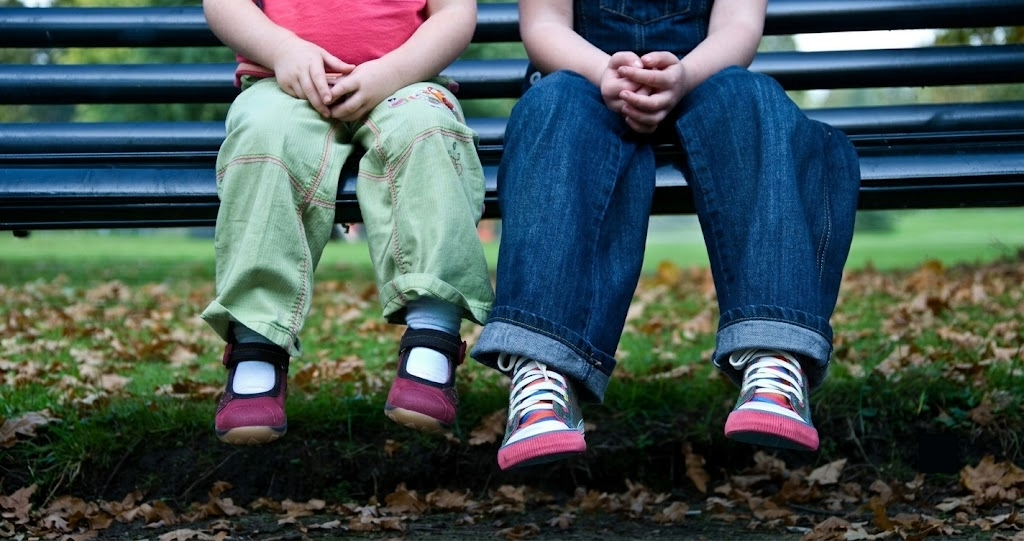
Two children sitting on a park bench, with the child on the left displaying feet pointing inward, illustrating the pediatric foot condition known as in-toeing or being pigeon-toed.

Published: 05 September 2024 | Last reviewed: 27 July 2026 

The Correct Treatment Option for In-Toeing (Pigeon-Toe) in Children

In recent years, there has been an increase in the prescription of Ankle-Foot Orthotics (AFOs), including the Richie Brace, for treating in-toeing in children in Singapore. While AFOs are highly effective for certain conditions like drop foot or severe ankle instability, their use in cases of in-toeing raises concerns. This trend appears to be driven more by financial incentives than by clinical necessity, leading to the overprescription of expensive and restrictive devices when less invasive treatments would suffice.

What Is In-Toeing, and How Is It Treated?

In-toeing, or “pigeon-toeing,” is a common condition in children where the feet turn inward when walking. In many cases, it is mild and self-resolving as the child grows and forms part of normal development. However, when treatment is needed, custom-made orthotics like gait plates are effective. Gait plates encourage external rotation of the foot without restricting movement, helping to correct in-toeing in a natural way. Gait plates fit into a shoe and fit under the foot. It is not visible externally and does not restrict any movement.

Why AFOs should not be used for In-Toeing

AFOs, such as the Richie Brace, are designed to stabilize the foot and ankle in more severe conditions like posterior tibial tendon dysfunction or chronic ankle instability. These devices restrict ankle movement, which is unnecessary for treating in-toeing. Gait plates, which are less restrictive and far more comfortable, are often sufficient to address the rotational abnormalities causing in-toeing. Moreover, AFOs are far more expensive than gait plates, adding a financial burden that is not justified.

The Psychological and Physical Impact

Children who wear AFOs may experience social anxiety or reduced self-esteem due to the visibility of the brace, especially in school settings. Research shows that some children feel self-conscious or are teased when wearing such devices. Furthermore, the unnecessary restriction of movement in the ankle could even lead to temporary muscle weakness if not paired with physical therapy.

Conclusion

For mild to moderate in-toeing, custom-made orthotics like gait plates are an effective, cost-efficient, and non-restrictive solution. The overuse of AFOs, particularly the Richie Brace, represents an unnecessary and expensive treatment option that may have psychological and physical impacts on children. Parents should be informed about more appropriate treatments that don’t burden their child with unnecessary devices.

Book An Appointment

Disclaimer: The word "treatment" in this article refers to the care and management of a patient’s health to prevent, cure, or improve a condition. Treatment results vary and do not necessarily indicate a cure. This article is for informational and educational purposes only and does not constitute medical advice. Persistent, severe, unusual or progressively worsening heel pain should be assessed by an appropriately qualified healthcare professional.

About the author

Mark Reyneker is a podiatrist and human gait specialist with 8 years of training and over 25 years of clinical experience. He is the Founder and Clinical Director of Family Podiatry Centre and has a Bachelors degree in Podiatric Medicine and a Master’s degree in paleoanthropology, with research focused on human foot function and metatarsal loading.

Bibliography:
  1. Redmond AC. The effectiveness of gait plates in controlling in-toeing symptoms in young children. Journal of the American Podiatric Medical Association. 2000;90(2):70-6. Available at: https://japmaonline.org/doi/10.7547/87507315-90-2-70.

Frequently Asked Questions

If the condition does not resolve on its own and requires treatment, custom-made orthotics called gait plates are a highly effective option. Gait plates fit under the foot inside the child's shoe, encouraging the foot to rotate outward naturally. They are entirely hidden from the outside and do not restrict a child's movement.

No, the use of Ankle-Foot Orthotics (AFOs), such as the Richie Brace, is generally not recommended for treating simple in-toeing. AFOs are designed to stabilize the foot and ankle for more severe conditions like chronic ankle instability or drop foot. For in-toeing, these devices are unnecessarily restrictive and significantly more expensive than gait plates.

Yes. Because AFOs unnecessarily restrict ankle movement, they can potentially lead to temporary muscle weakness if they are not paired with physical therapy. Furthermore, because the braces are highly visible, children may experience social anxiety, reduced self-esteem, or teasing in school settings.

For mild to moderate in-toeing, gait plates are a much more appropriate, cost-efficient, and non-restrictive solution. They successfully correct the rotational abnormalities causing in-toeing without burdening the child with the physical restrictions or psychological impacts of large, expensive devices.
All rights reserved | Blog