UTMB 2026: The Shoes, Bodies and Biomechanics Behind the Fastest Men’s Podium Ever



7 September 2026
By Mark Reyneker, BTech (Podiatry), MSc (Palaeontology), Registered Podiatrist, Foot & Gait Specialist | Founder & Clinical Director, Family Podiatry Centre
What Ben Dhiman, Baptiste Chassagne and Caleb Olson—and three very different shoe designs—can teach us about trail-running biomechanics
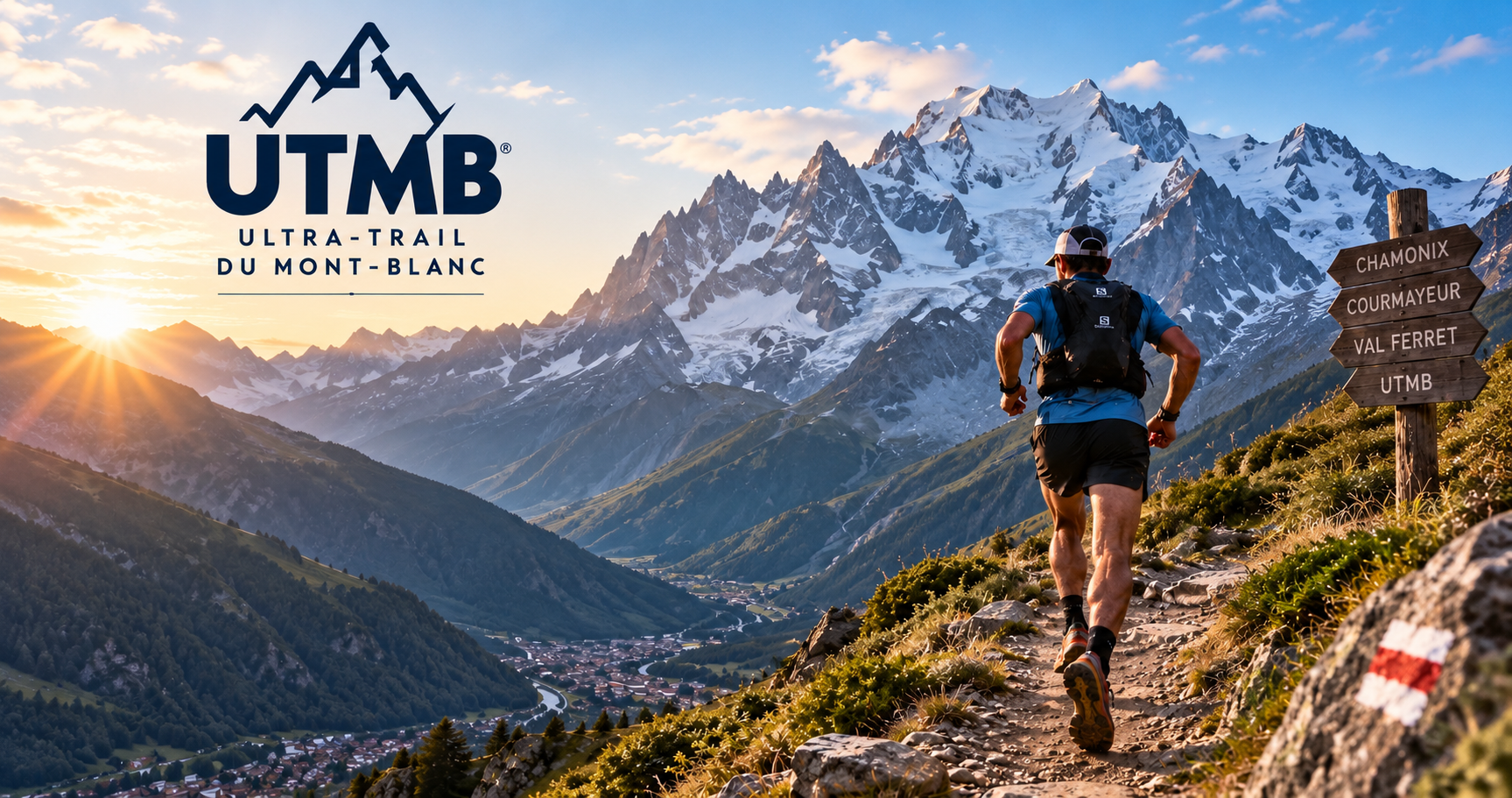
Ben Dhiman won in 18:16:29. Baptiste Chassagne followed in 18:47:38, with Caleb Olson only 46 seconds behind him in 18:48:24. All three men therefore completed UTMB in under 19 hours. Dhiman’s was the fastest finishing time ever recorded at the race, although the 2026 course had been modified because of weather conditions and should therefore not be treated as directly equivalent to every previous edition.
At first glance, this is simply a story about three exceptionally fit ultrarunners. But look beneath their feet and another story appears.
Dhiman raced in the ASICS Metafuji Trail 2, using an X-shaped full-length carbon plate.
Chassagne wore the On Cloudultra Pro, which uses a reinforced fibreglass Speedboard rather than a carbon plate.
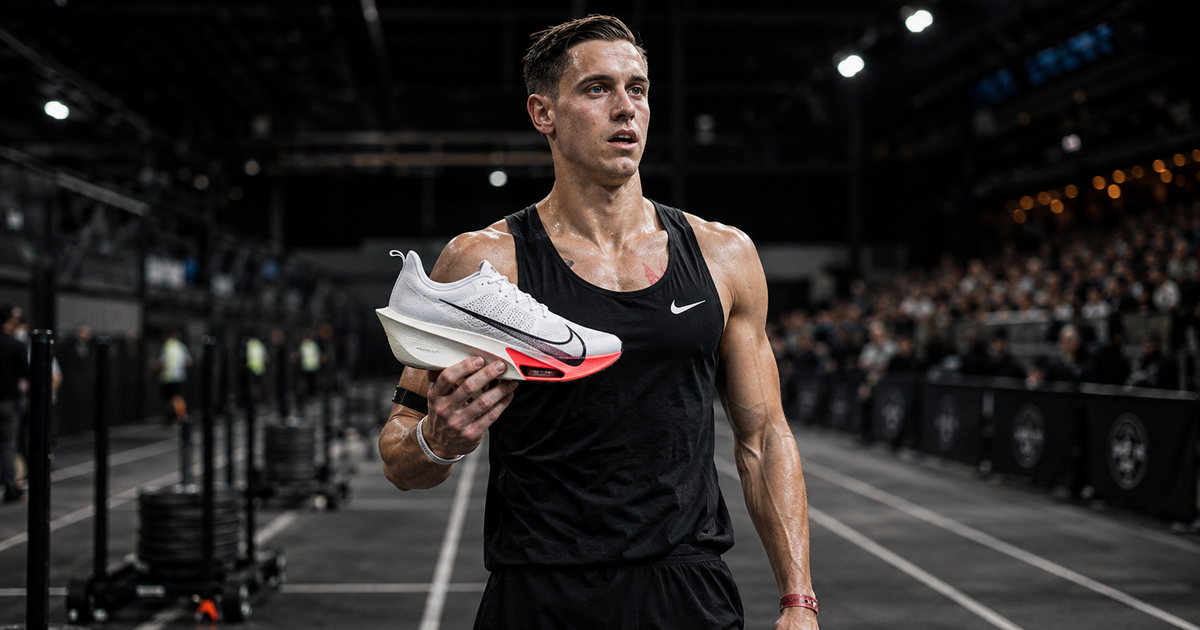
Olson wore the new Nike ACG Ultrafly, where Nike has deliberately reduced carbon-plate rigidity and split the central spine of the plate to permit greater torsional movement over uneven terrain.
Three athletes. Three shoe architectures. Three different approaches to stiffness.
That makes the podium an intriguing lens through which to ask a much more interesting question than simply, Which shoe was fastest? How rigid should the foot–shoe complex actually be when running for 174 kilometres across mountainous terrain?
Ben Dhiman: the athlete built through volume, mountains and specificity
That matters when trying to understand the athlete. There is no good evidence that Dhiman benefited from growing up at altitude or spending his childhood in the Alps. His major mountain exposure came later. What he has accumulated instead is an enormous amount of endurance work.
His 2026 UTMB build was remarkable. During the final six-week block, Dhiman reported averaging approximately 25 hours of training per week, around 200 kilometres of running and more than 10,000 metres of vertical gain every week. He deliberately controlled intensity so that he could absorb this extraordinary volume.
That is roughly 1,200 kilometres and more than 60,000 metres of ascent in six weeks.
But perhaps the most interesting change was not volume. It was specificity.
Dhiman said that in 2025 he had thought about UTMB too much as a running race. For 2026, he recognised that a substantial portion of UTMB’s climbing is actually hiked. Consequently, much of his climbing training was performed using poles, race equipment and very steep terrain around his home in the Pyrenees.
His words are revealing: he wanted to develop his “hiking gearbox.”
That is excellent training specificity.
There comes a gradient at which running becomes metabolically inefficient, even for elite runners. At that point, the question is no longer whether the athlete walks; it becomes how efficiently the athlete can walk uphill at speed.
Dhiman also describes himself as having “very long legs”, which he believes may help his hiking mechanics. We should be careful not to overinterpret this anthropometrically, because reliable published height and weight figures are unavailable, but it provides an interesting insight into how he perceives his own morphology.
What we can say visually is that he has the classic lean endurance morphology expected at this level, without the extremely minimal muscular appearance of some elite road marathoners. That distinction makes sense.
Ultra-trail athletes must climb efficiently, but they also need enough lower-limb muscular capacity to tolerate hours of eccentric loading while descending. And beneath Dhiman was arguably the most technically interesting shoe of the podium.
ASICS Metafuji Trail 2: the winner’s shoe
SpecificationASICS Metafuji Trail 2Heel stack | 41.5 mm
Forefoot stack | 36.5 mm
Heel-to-toe drop | 5 mm
Manufacturer weight | 254 g
Plate | X-shaped, full-length carbon
Upper foam | FF LEAP
Lower foam | FF BLAST PLUS
Outsole | ASICSGRIP
Fit | Standard D
ASICS specifically describes the shoe as having an X-shaped full-length carbon plate, with the geometry intended to improve stability on uneven terrain. This is where plate design begins to get interesting.
A road supershoe can use a relatively broad, continuous plate because the running surface is largely predictable. Mountain trails create a different engineering problem.
One side of the forefoot may land on a rock while the other side remains unsupported. The rearfoot may be tilted relative to the forefoot. The surface underneath MT1 may be substantially higher than that underneath MT5. A plate therefore has to fulfil two potentially opposing requirements. It needs enough longitudinal bending stiffness to influence propulsion.
But excessive torsional stiffness may make the shoe less able to accommodate uneven terrain. These are not the same mechanical property.
Try bending a shoe upward through the forefoot. Then try twisting the forefoot relative to the rearfoot.
You are testing two different stiffness characteristics.
The X-shaped geometry is therefore more sophisticated than simply saying:
“This shoe has carbon.”
The important question becomes:
Where has ASICS chosen to place stiffness, and where has it allowed movement?
Independent testers have also reported that the plate in version 2 feels appreciably more flexible than the earlier Metafuji construction, while the stack was reduced by approximately 3 mm compared with its predecessor in an apparent effort to improve stability.
That evolution itself is telling. The technological direction is not simply towards more stiffness.
It appears to be moving towards better-controlled stiffness.
Baptiste Chassagne: tall, lean and remarkably light
- Height: 186 cm
- Weight: 72 kg
That corresponds to a BMI of approximately 20.8 kg/m². BMI is not particularly useful as a performance metric in an athlete, but it confirms what is obvious from his build: Chassagne is tall and extremely lean.
That morphology makes intuitive sense in mountain endurance racing. Every additional kilogram has to be repeatedly elevated against gravity during almost 10,000 metres of ascent.
Yet an ultrarunner cannot simply minimise muscle mass indefinitely because descending creates extraordinary eccentric loading of the quadriceps and other lower-limb musculature.
Elite mountain runners therefore represent something of a compromise:
very low unnecessary mass, but sufficient muscular durability to survive the descents.
Chassagne held second place despite Caleb Olson’s remarkable charge late in the race. And beneath him was the odd shoe out.
Because it did not use carbon.
On Cloudultra Pro: the non-carbon shoe that finished second
SpecificationOn Cloudultra ProHeel-to-toe drop | 6 mm
Weight | 275 g
Midsole | Dual-density Helion HF
Plate/stiffener | Reinforced fibreglass Speedboard
Outsole | Missiongrip
Intended use | Ultra-distance trail racing
On explicitly describes the Speedboard as reinforced fibreglass, settling one ambiguity that existed in some earlier shoe reviews.
Independent measurements put the stack at approximately 38.5 mm in the heel and 32.5 mm in the forefoot, giving the stated 6 mm drop.
The Speedboard itself is forked.
That becomes extremely relevant to our central argument. Because once again, instead of simply placing one rigid slab underneath the entire foot, the manufacturer has created a structure that allows the forefoot to behave with some degree of segmentation.
And Chassagne ran 18:47:38 in it.
That is an important reminder that the presence or absence of carbon alone tells us surprisingly little about how sophisticated a shoe is.
Caleb Olson: the ultrarunner with genuine track speed
Born on 14 December 1995, Olson was 30 during the 2026 season. His track performances reveal genuine conventional running ability:
- 10,000 m — 29:11.84
- 5,000 m — 14:21.02
- 3,000 m — 8:10.39
- 1,500 m — 3:51.99
A sub-30-minute 10K is important context.
Olson is not simply an athlete who can continue moving for an extraordinarily long time. He has substantial absolute running speed.
At UTMB that speed was combined with remarkable fatigue resistance. He moved through the field during the second half of the race and eventually closed to within just 46 seconds of Chassagne. After nearly 19 hours of competition, the two were effectively still racing for position. And Olson was wearing perhaps the clearest demonstration of the new trail-shoe design philosophy.
Nike ACG Ultrafly: carbon that Nike deliberately made less rigid
But the important phrase in Nike’s own technical description is this:
The redesigned plate is less rigid than the previous Ultrafly.
Even more interestingly, Nike splits the central spine of the plate. Nike says this allows the structure to flex over roots, rocks and difficult terrain and specifically identifies improved torsional flexibility as an objective.
That is significant.
Nike could have made the plate stiffer. It deliberately chose not to. The shoe therefore uses carbon, but the engineering goal is not maximal rigidity.
It is directional rigidity.
Nike has also broadened the trail-specific last and provided a more accommodating forefoot, again reflecting the fact that an ultra-racing shoe has different requirements from a road 5K racing shoe.
Three shoes, three different stiffness strategies
Ben DhimanBaptiste ChassagneCaleb OlsonShoe | ASICS Metafuji Trail 2 | On Cloudultra Pro | Nike ACG Ultrafly
Heel stack | 41.5 mm | ~38.5 mm | ~37 mm
Forefoot stack | 36.5 mm | ~32.5 mm | ~28.5 mm
Drop | 5 mm | 6 mm | ~8.5 mm
Stiffener | Carbon | Fibreglass | Carbon
Architecture | X-shaped | Forked | Split-spine
Design direction | Selective rigidity | Segmented rigidity | Reduced torsional rigidity
The striking feature is not simply that two contain carbon and one does not.
It is the geometry.
- X.
- Fork.
- Split.
Three manufacturers have independently moved away from the concept of an undifferentiated rigid slab underneath the entire foot.
That deserves attention.
Why carbon plates work is more complicated than we once thought
A stiff plate limits bending of the forefoot. Less bending means less energy is dissipated at the metatarsophalangeal joints.
The foot becomes a more effective lever. Running economy improves.
There is some truth in this.
Increasing longitudinal bending stiffness can alter MTP-joint mechanics, and experimental research has shown that carbon-plated shoes can reduce MTP movement. A 2025 fatigue study, for example, found significantly restricted MTP flexion in carbon-plated footwear.
But modern evidence suggests that the entire mechanism cannot be attributed to the plate. A major 2025 systematic review and meta-analysis examined 48 studies involving 878 participants. Advanced footwear technology improved running economy by approximately 2.7%.
However, neither longitudinal bending stiffness nor midsole energy return independently explained the improvement. The authors concluded that the advantage likely arises through the interaction between shoe stiffness, foam behaviour, geometry and the runner.
That distinction is crucial.
A carbon plate is not simply a spring.
The 2026 carbon-plate evidence adds another layer
The researchers found no consistent significant differences in:
- MTP positive power
- Knee positive power
- Hip positive power
- Overall leg stiffness
There was evidence of reduced ankle power, suggesting that some of the mechanical effects may occur distally rather than through wholesale changes to the entire lower limb. Meanwhile, another recent meta-analysis examining metabolic outcomes found that plated footwear can indeed reduce oxygen and metabolic cost overall.
Put those findings together and an interesting picture emerges.
The footwear works.
But the explanation is not simply:
Carbon bends and springs the runner forwards.
The mechanism probably involves an interaction among foam compliance, energy return, plate geometry, rocker geometry, MTP motion, ankle mechanics, shoe mass and individual running mechanics. And that becomes even more complex when the runner leaves the road.
Trail running introduces a problem that road supershoes largely avoid
The ground under MT1 and MT2 may be several centimetres higher than the ground beneath MT4 and MT5. A completely rigid structure attempts to hold both sides of the shoe in the same relationship. A torsionally compliant structure can allow the medial and lateral portions of the shoe to move somewhat more independently.
Trail footwear therefore has two competing requirements.
It benefits from longitudinal stiffness. But it may also benefit from torsional compliance.
That is precisely why the Nike development is so revealing. Nike specifically redesigned the plate to be less rigid and created its split spine to increase torsional movement over irregular surfaces.
ASICS reaches a similar destination through a completely different geometry. On does it using a fork.
Three solutions to essentially the same engineering problem.
And this is where the human metatarsals become fascinating
As part of my Master's research in palaeontology at the University of the Witwatersrand, I investigated the relationship between human metatarsal cross-sectional geometry and high- versus low-gear propulsion.
The study included 53 individuals drawn from three populations: Later Stone Age southern Africans, post-industrial South Africans and Jomon individuals from Japan. Rather than examining the metatarsals at only a conventional midshaft location, I measured cross-sectional geometric properties of MT1–MT5 at 25%, 35%, 50% and 65% of biomechanical length.
The central question was simple:
Does the skeletal architecture of the human forefoot support one overwhelmingly medial propulsive pathway, or is forefoot loading more variable?
The results showed greater rigidity and strength overall in the high-gear metatarsals, particularly in the South African comparative groups. But the Jomon displayed a different distribution.
Differences between MT1 and MT5 were much smaller, and for some structural measures MT5 actually exceeded MT1. The results therefore suggested variability in how forefoot rigidity is distributed rather than one invariant pattern of propulsion.
My subsequent analysis of the dataset has made that pattern even clearer: population differences are strongest around the 25% and 35% shaft regions, while differences diminish at more distal levels. That is important because it tells us something conceptually useful about the human foot.
The forefoot is not one beam.
Five metatarsals, not one plate
They possess different cross-sectional geometries, different dimensions and different loading histories.
The joints and soft tissues between them permit controlled relative movement. That means the foot can become sufficiently rigid for propulsion while remaining capable of adapting to the surface beneath it.
This concept has substantial independent experimental support. Venkadesan and colleagues demonstrated that the transverse architecture of the foot contributes substantially to longitudinal stiffness. The principle is surprisingly elegant.
Take a flat sheet of paper. It bends easily longitudinally. Now curve it transversely. Suddenly it becomes much harder to bend along its length.
The same structural principle contributes to human foot stiffness.
The transverse curvature of the metatarsals and the soft tissues linking them therefore contribute to the rigidity of the entire foot without requiring the forefoot to become a single fused structure. That is an extraordinarily sophisticated biological solution.
Now look again at the three UTMB shoes
X-shaped reinforcement.
On:
Forked reinforcement.
Nike:
Longitudinally split reinforcement.
I am not suggesting that these manufacturers deliberately copied metatarsal anatomy. There is no evidence for that.
But there is an intriguing mechanical analogy.
Evolution and footwear engineering are confronting a related structural problem:
How can a system become stiff enough in one direction to transmit force efficiently while retaining movement in another direction to accommodate an irregular surface?
The biological foot solves the problem through multiple bones, joints, ligaments, fascia, intrinsic muscles and transverse curvature. The footwear industry is attempting to solve it with shaped plates, split plates, forks, variable foam geometry, rocker profiles and wider platforms.
The solutions are different.
The mechanical problem is remarkably similar.
Stack height creates another trade-off
Dhiman's ASICS:
41.5 / 36.5 mm — 5 mm drop
Chassagne's On:
approximately 38.5 / 32.5 mm — 6 mm
Olson's Nike:
approximately 37 / 28.5 mm — 8.5 mm
The winner therefore wore the shoe with the highest stack and lowest drop of the three. Olson wore the lowest forefoot platform and highest drop.
That alone tells us there is no single obligatory geometry for elite ultrarunning.
High stack offers potential advantages. There is more cushioning material. There is greater opportunity to use compliant, high-energy-return foams. The plate can be positioned within a larger midsole structure. But height also introduces a mechanical trade-off.
As the plantar surface of the foot moves farther from the ground, the ground-reaction force can potentially act through a larger lever arm during an off-centre landing.
On irregular terrain, that may increase the importance of:
- Platform width
- Heel geometry
- Foam firmness
- Upper containment
- Outsole grip
- Torsional flexibility
In other words, stack height cannot sensibly be discussed without discussing the rest of the shoe.
https://www.nike.com/sg/t/acg-ultrafly-trail-racing-shoes-lnyZAtQW/HF5668-300
The forefoot also needs space
Long-duration locomotion, repeated loading, heat and fluid shifts can alter foot volume.
Nike specifically describes the ACG Ultrafly as having an accommodating forefoot and a trail-specific last designed for prolonged comfort. That is not merely a comfort feature. At this level, comfort is part of performance.
- Pain alters gait
- Toe compression changes loading
- Blisters change contact patterns
- Nail trauma changes toe-off
A theoretically perfect plate becomes irrelevant if the athlete cannot comfortably remain inside the shoe.
Chassagne may actually give us the most interesting footwear result
But from a footwear-science perspective, Chassagne may be the most provocative athlete on the podium. Because he finished second without a carbon plate. After almost 19 hours of racing, the gap between Chassagne and carbon-shod Olson was only 46 seconds.
We cannot infer from that that the On shoe is faster. This was not a controlled experiment.
Different athletes have different physiology, pacing, nutrition, biomechanics and racing strategies.
But it does destroy one simplistic assumption:
Carbon is not synonymous with performance.
The second-fastest man at UTMB demonstrated that extremely sophisticated ultra-racing footwear can be built around a non-carbon stiffening structure. Carbon is a material. What matters biomechanically is what the shoe does.
We may have been asking the wrong question
Does this shoe have a carbon plate?
That is increasingly the wrong question.
A better set of questions is:
- Where is the stiffening structure?
- What material is it made from?
- How much longitudinal bending stiffness does it create?
- How much torsional stiffness does it create?
- Where does the plate split?
- Where does it terminate?
- How does it interact with the rocker?
- How wide is the platform?
- How compliant is the foam?
- How does the foot move relative to the shoe?
And perhaps most importantly:
What happens when the athlete becomes fatigued?
A shoe is not interacting with the same neuromuscular system at kilometre 160 that it was at kilometre 5.
That may be one of the major unanswered questions in ultra-footwear research.
From metatarsal evolution to modern trail plates
It created five metatarsals.
It created joints between them.
It created a transverse arch.
It created a plantar aponeurosis.
It created intrinsic muscles capable of altering stiffness dynamically.
And it produced a structure that can transition from compliant to rigid depending on the task.
My own metatarsal research suggests that even the structural distribution of rigidity across the forefoot is not necessarily identical between human populations. Modern footwear engineering appears to be moving towards a similarly nuanced idea.
Not:
Maximum stiffness.
But:
Stiffness in the right place, in the right direction, at the right time.
An X.
A fork.
A split spine.
Perhaps that is the real technological story beneath the 2026 UTMB podium.
What the fastest UTMB podium may be telling us
Baptiste Chassagne did not finish second because fibreglass is somehow superior to carbon.
Caleb Olson did not finish third because ZoomX or a split FlyPlate produced his late-race charge.
Shoes do not create elite athletes. But good footwear can potentially improve the efficiency, comfort and mechanical behaviour of the athlete who is already inside it. And what is fascinating about the 2026 podium is that all three manufacturers appear to have arrived at variations of the same emerging concept.
The future of trail supershoes may not be about making the foot more rigid.
It may be about understanding exactly where rigidity is useful and where movement must remain.
Road supershoes made runners think about longitudinal bending stiffness. Trail supershoes may force us to think in three dimensions.
Longitudinal stiffness for propulsion. Torsional compliance for terrain adaptation.
Adequate stack for cushioning. Adequate width for stability. Enough forefoot room for ultra-distance comfort.
And enough freedom for the extraordinary human foot beneath the shoe to continue doing what evolution designed it to do.
Perhaps the best trail supershoe will not be the shoe that prevents the foot from moving.
It will be the shoe that knows exactly where to let it move.
Book An Appointment
Disclaimer: The word "treatment" in this article refers to the care and management of a patient’s health to prevent, cure, or improve a condition. Treatment results vary and do not necessarily indicate a cure. This article is for informational and educational purposes only and does not constitute medical advice.
About the Author
Mark B. Reyneker, BTech (Podiatry), MSc (Palaeontology) is a podiatrist and Founder & Clinical Director of Family Podiatry Centre, with more than 25 years of clinical experience across South Africa, Malaysia and Singapore. His clinical interests include foot and lower-limb pain, gait and biomechanics, sports-related foot conditions, orthotic therapy and footwear.
Alongside his clinical practice, Mark conducts research into human gait and foot biomechanics. His MSc research at the University of the Witwatersrand investigated human propulsion and the structural properties of the metatarsals. He is also the inventor of A Foot Orthotic, an orthotic technology developed through an international patent family.
References
- Reyneker, M.B. (2023). An investigation into high gear and low gear propulsion in human gait and its relation to metatarsal diaphyseal geometric cross-sectional properties. Master's dissertation, Master of Palaeontology, University of the Witwatersrand, Johannesburg. The archived Wits copy confirms the thesis title, degree and 2023 declaration date. View the dissertation in the Wits repository
- Stephen, C.H.N., Kelly, L.A., Schuster, R.W. & Diamond, L.E. (2025). The effects of running shoe longitudinal bending stiffness and midsole energy return on oxygen consumption and ankle mechanics and energetics: a systematic review and meta-analysis. Journal of Sport and Health Science, 14, 101069.
Original article: https://www.sciencedirect.com/science/article/pii/S2095254625000481 - Martin, S.G., Kobayashi, E.N. et al. (2026). Carbon plates in running shoes biomechanics: a systematic review and meta-analysis. Frontiers in Sports and Active Living, 8, 1764338.
Original article: https://www.frontiersin.org/journals/sports-and-active-living/articles/10.3389/fspor.2026.1764338/full - ASICS (2026). METAFUJI TRAIL 2 technical specifications and product information.
Official website: https://www.asics.com/us/en-us/metafuji-trail-2/p/ANA_1013A178-750.html - On (2026). Cloudultra Pro technical specifications. On lists a 6-mm drop, 275-g weight, dual-density Helion HF cushioning and reinforced fibreglass Speedboard.
Official website: https://www.on.com/en-sg/products/cloudultra-pro - Nike (2025). ACG Ultrafly technical development. Nike describes a less-rigid carbon FlyPlate incorporating a split spine for increased torsional flexibility and a trail-specific last with an accommodating forefoot.
Official website: https://www.nike.com/sg/t/acg-ultrafly-trail-racing-shoes-lnyZAtQW/HF5668-300 - World Athletics (2026). Caleb Olson athlete profile and personal bests.
Original website: https://worldathletics.org/athletes/united-states/caleb-olson-14926965https://www.irunfar.com/ben-dhiman-2026-utmb-champion-interview - Naak (2026). Baptiste Chassagne athlete profile.
Original website: https://www.naak.com/pages/baptiste-chassagne?srsltid=AU7gw4Uv-zmcTJ0tPSbpA2YUdRtlqJSiIKp4wpMnqMMRJnbYo_pI36Ke - iRunFar (2026). Ben Dhiman pre-UTMB interview. Dhiman discusses his increased hiking-specific preparation, long legs and use of poles and race equipment during steep-climbing training.
Original website: https://www.irunfar.com/ben-dhiman-2026-utmb-champion-interview - UTMB / race reporting (2026). Men's results: Dhiman 18:16:29; Chassagne 18:47:38; Olson 18:48:24.
Original Website: https://www.irunfar.com/2026-utmb-results
Frequently Asked Questions
Ben Dhiman won the 2026 race with a time of 18:16:29, which was the fastest finishing time ever recorded at the race (though the course had been slightly modified due to weather).
The podium consisted of Ben Dhiman (18:16:29) in first, Baptiste Chassagne (18:47:38) in second, and Caleb Olson (18:48:24) in third. All three men completed the grueling course in under 19 hours.
Dhiman accumulated massive volume—averaging 25 hours, 200 kilometers, and 10,000 meters of vertical gain per week in his final six-week block. Crucially, he focused on building his "hiking gearbox" by training with poles on very steep terrain, realizing that a substantial portion of the UTMB course is hiked, not run.
Ultrarunners require a compromise: very low unnecessary mass to make climbing efficient, but enough muscular durability to survive hours of eccentric loading on the descents. For example, second-place finisher Baptiste Chassagne is 186 cm and 72 kg, demonstrating a tall, extremely lean morphology. Trail Shoe Technology & Carbon Plates
Ben Dhiman wore the ASICS Metafuji Trail 2. Baptiste Chassagne wore the On Cloudultra Pro. Caleb Olson wore the Nike ACG Ultrafly.
No. While the first and third-place finishers wore carbon plates, Baptiste Chassagne finished second (just 46 seconds ahead of third) wearing the On Cloudultra Pro, which uses a reinforced fibreglass "Speedboard" rather than carbon.
According to ASICS's 2026 technical specifications, the shoe features an X-shaped, full-length carbon plate. This geometry is specifically intended to improve stability on uneven terrain by providing selective rigidity.
Nike deliberately redesigned the carbon FlyPlate in the ACG Ultrafly to be less rigid. It features a split central spine to increase torsional flexibility, allowing the shoe to bend over roots, rocks, and uneven terrain.
Longitudinal stiffness is how hard it is to bend the shoe upward from heel to toe (which helps with forward propulsion). Torsional stiffness is how hard it is to twist the shoe side-to-side. Trail shoes need longitudinal stiffness for energy efficiency, but require torsional compliance to adapt to irregular mountain terrain.
While a high stack provides more cushioning and energy-returning foam, it moves the foot further from the ground. On irregular terrain, this increases the lever arm during an off-center landing, making the shoe potentially more unstable and increasing the reliance on outsole grip and platform width.
Over hours of repeated loading, heat, and fluid shifts, foot volume changes and swells. If a shoe is too tight, it causes pain, blisters, or nail trauma. Because pain alters a runner's gait and mechanics, comfort directly impacts athletic performance in ultramarathons.
No. A 2025 systematic review (Stephen et al.) analyzing 48 studies found that advanced footwear improves running economy by about 2.7%, but neither longitudinal bending stiffness nor midsole energy return independently explained the improvement. The benefit comes from a complex interaction between the shoe's foam, geometry, plate, and the individual runner.
A 2026 meta-analysis (Martin et al.) found no consistent significant differences in the positive power generated by the hip or knee when wearing plated shoes. However, there was evidence of reduced ankle power, suggesting the mechanical effects happen lower down the leg.
No. The human forefoot consists of five separate metatarsals connected by joints, ligaments, and intrinsic muscles. This allows the foot to become sufficiently rigid for propulsion when needed, while remaining capable of adapting to uneven surfaces.
A 2023 University of the Witwatersrand dissertation by Mark Reyneker examined metatarsal cross-sectional geometry across different historic populations. It revealed that structural rigidity in the human forefoot is distributed variably (especially between the 1st and 5th toes), proving the forefoot functions dynamically rather than as a single rigid beam.
Research (such as studies by Venkadesan) demonstrates that the transverse architecture (side-to-side curve) of the foot contributes substantially to longitudinal stiffness. Just as curving a flat piece of paper makes it harder to bend lengthwise, the foot's natural arches create rigidity without needing fused bones.
Trail shoe manufacturers are moving away from single, stiff slabs of carbon. By using X-shapes (ASICS), forks (On), and split spines (Nike), engineers are trying to solve the same problem evolution solved with five separate metatarsals: providing stiffness for power, while allowing segmented movement for terrain adaptation.
There is some truth to this. Experimental research (including a 2025 fatigue study) has shown that stiff carbon-plated shoes can restrict metatarsophalangeal (MTP) joint flexion. Limiting this bending means less energy is dissipated at the toe joints, making the foot a more effective lever.
A shoe does not interact with the same neuromuscular system at kilometer 160 as it does at kilometer 5. As a runner fatigues, their stride, foot loading, and biomechanics change, which is why a shoe's ability to remain comfortable and accommodate altered mechanics late in a race is critical.
The 2026 UTMB podium proves that the future of trail shoes is not about maximum stiffness. It is about "directional rigidity"—engineering plates to be stiff in the exact places needed for forward propulsion, while allowing natural torsional movement to adapt to mountain terrain.