Barefoot Shoes: Are Minimalist Shoes Really Better for Your Feet?



7 September 2026
By Mark Reyneker, BTech (Podiatry), MSc (Palaeontology), Registered Podiatrist, Foot & Gait Specialist | Founder & Clinical Director, Family Podiatry Centre
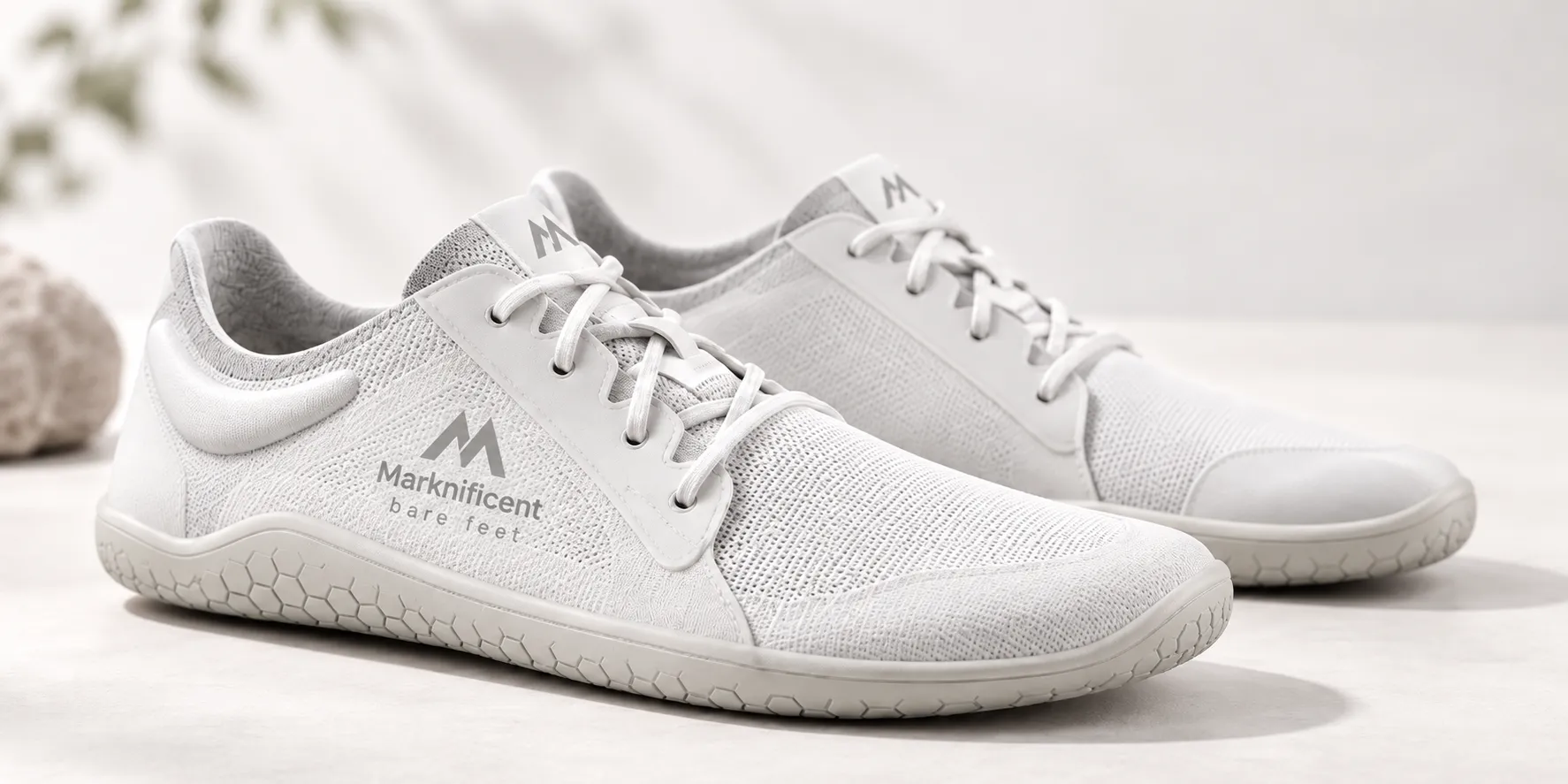
Barefoot or minimalist shoes are designed to interfere less with natural foot movement by using features such as a wide toe box, low heel-to-toe drop, minimal cushioning, low weight and a flexible sole. Research suggests that regularly using minimalist footwear can increase foot-muscle strength and may alter walking or running mechanics, but this does not mean barefoot shoes are universally better or that they prevent injury. Instead, they redistribute load: some forces may decrease while stress on the calf, Achilles tendon, forefoot and metatarsals may increase. For that reason, the effect of barefoot shoes depends on the individual, the activity and how gradually the body adapts. They are best viewed as a different loading strategy rather than an inherently healthier type of footwear
An evidence-based look at barefoot shoes, foot strength, injury risk, running and gym training
Therefore, shouldn't allowing the foot to function more naturally make it stronger and healthier?
What is actually meant by a “barefoot shoe”?
Barefoot shoes, minimalist shoes, zero-drop shoes, wide-toe-box shoes and flexible shoes are frequently discussed as though they are interchangeable.
Researchers have developed a formal definition of minimalist footwear. Esculier et al. (2015) described a minimalist shoe as footwear that interferes minimally with natural foot movement because of:
- High flexibility
- Low weight
- Low stack height
- Low heel-to-toe drop
- Absence of motion-control and stability devices
A shoe can have a zero heel-to-toe drop while still containing substantial cushioning. Another shoe might have an extremely wide toe box while having a relatively conventional midsole. A third might be extremely thin and flexible. These shoes may affect the body differently. Therefore, rather than simply asking whether a shoe is “barefoot”, it is more useful to consider its individual characteristics.
What does “zero drop” mean?
Overall injury risk was not significantly different between the three groups (Malisoux et al., 2016). Therefore, simply reducing heel-to-toe drop cannot currently be claimed to prevent running injuries.
Do barefoot shoes strengthen your feet?
Yes, they can.
Ridge et al. (2019) randomly assigned 57 runners to one of three groups:
- Walking progressively in minimalist shoes
- Performing specific foot-strengthening exercises
- Continuing normally as controls
Minimalist footwear can provide a training stimulus to the muscles of the foot and probably increases foot strength over time.
That is quite different from claiming that everyone needs minimalist footwear.
Do conventional shoes make your feet weak?
At present, it is therefore more scientifically accurate to say:
Minimalist footwear may increase the strengthening stimulus provided to the foot.
rather than:
Conventional shoes weaken your feet.
The second statement goes considerably beyond what the research has established.
Stronger feet do not automatically mean fewer injuries
- Fewer running injuries
- Less plantar fasciitis
- Fewer stress fractures
- Less Achilles tendinopathy
- Improved athletic performance
- Better long-term foot health
Minimalist shoes don't remove forces – they redistribute them
- Where the load occurs
- How quickly it occurs
- Which joints move
- Which muscles contribute
- Which tissues absorb and return energy
Minimalist running can reduce certain biomechanical loads around the knee while simultaneously increasing loads elsewhere.
What happens at the knee?
- Shorter stride length
- Increased cadence
- Reduced ground-contact time
- Reduced knee extension moments
- Reduced knee power absorption
- Increased knee flexion at initial contact
- Altered ankle position at ground contact
But something else happened simultaneously.
The load moves toward the ankle and Achilles tendon
- Achilles tendon
- Calf musculature
- Ankle
- Forefoot
- Metatarsals
Minimalist shoes do not necessarily reduce loading. They change the loading strategy.
This helps explain why one runner may report that minimalist shoes improved knee symptoms while another develops calf, Achilles or forefoot symptoms after transitioning. Both experiences are mechanically plausible.
Loading isn't necessarily bad
Muscles become stronger when challenged. The problem occurs when the load being applied repeatedly exceeds the tissue's current capacity to tolerate and recover from that load.
LOAD + RECOVERY + ADAPTATION = INCREASED CAPACITY
But:
TOO MUCH LOAD + INSUFFICIENT ADAPTATION = INJURY RISK
This is particularly important when someone has spent decades wearing conventional shoes and suddenly changes footwear.
Your gait may adapt faster than your tissues
One particularly interesting study demonstrated this using MRI.
What happened when runners changed to Vibram FiveFingers?
What happens to pressure underneath the forefoot?
- 13.5% under the medial forefoot
- 37.5% under the central forefoot
- 37.9% under the lateral forefoot
But aren't humans designed to run barefoot?
Humans existed for an extraordinarily long time before modern running shoes appeared.
Lieberman et al. (2010) famously compared habitually barefoot and habitually shod runners. Habitually barefoot endurance runners were more likely to land on the forefoot or midfoot, although some still heel-struck. Habitually shod runners were more likely to rearfoot strike.
Describing how humans can run without modern shoes; and
The first has been demonstrated.
“Natural” does not automatically mean medically superior
But evolution does not provide a medical prescription.
- Prescription glasses
- Dental braces
- Artificial joint replacements
- Modern mattresses
- Bicycles
- Synthetic running tracks
The relevant clinical question is therefore not:
“What did our ancestors wear?”
It is:
Does heel striking cause injuries?
The argument often goes:
Do barefoot shoes prevent running injuries?
Clinical superiority is not.
Does zero-drop footwear reduce injuries?
- 0 mm drop
- 6 mm drop
- 10 mm drop
Interestingly, subgroup analysis suggested that lower-drop shoes behaved differently in occasional versus regular runners.
The effect of footwear may depend as much upon the person wearing the shoe as the shoe itself.
What about running economy?
This is extremely important because it demonstrates why the minimalist-versus-cushioned debate is becoming outdated.
- Substantial cushioning
- Highly compliant foams
- High stack heights
- Increased longitudinal stiffness
The wide toe box deserves its own discussion
“My feet finally have room.”
This may be completely valid. But it may have relatively little to do with the shoe being minimalist.
It may simply mean that their previous shoes were too narrow.
- Toe movement
- Forefoot expansion
- Comfortable accommodation of foot shape
It is perfectly possible to manufacture a shoe with:
- Wide toe box + cushioning
- Wide toe box + zero drop + cushioning
- Wide toe box + conventional heel drop
They needed a wider shoe. It does not necessarily follow that they also needed less cushioning.
Are barefoot shoes better for the gym?
The answer depends on what you are doing in the gym.
Barefoot shoes for deadlifting
For deadlifting, therefore, minimalist footwear is a reasonable option, not a physiological requirement.
What about squatting?
A barefoot shoe generally provides:
A person with excellent ankle mobility may squat comfortably in flat shoes. Someone with restricted ankle dorsiflexion may find an elevated heel considerably more effective.
The best squat shoe is not necessarily the shoe that interferes least with the foot. It is the shoe that facilitates the mechanics required by that lifter.
What about ordinary resistance training?
- Bench press
- Seated resistance machines
- Biceps curls
- Cable exercises
- Many upper-body exercises
Their main potential advantage is providing the feet themselves with a greater sensory and muscular stimulus.
HYROX, CrossFit and functional training are different
This is very different from performing five sets of deadlifts. The shoe now needs to manage:
- Repeated impact
- Propulsion
- Braking
- Jumping
- Running
- Lateral movement
- Heavy loading
But minimal cushioning may provide little advantage during repeated impact activity.
What about proprioception and “feeling the ground”?
Someone wearing an extremely thin shoe can obviously feel the ground more clearly than someone standing on a thick foam midsole. But another important distinction is required. More sensory feedback does not automatically equal fewer injuries. It is biologically plausible that minimalist footwear influences proprioception and balance.
Should people with flat feet wear barefoot shoes?
Having a low arch does not automatically mean someone needs supportive shoes.
The important questions are:
- Is the foot painful?
- Is the deformity flexible or rigid?
- Is there tendon pathology?
- Is function impaired?
- What activity is being performed?
- What footwear is currently comfortable?
- Is an orthotic currently successfully controlling symptoms?
What about orthotics?
- Plantar pressure
- Centre of pressure
- Joint moments
- Tissue loading
- Movement timing
This brings us back to the central principle of this article. Footwear and orthoses are load-management tools.
Who might benefit from minimalist shoes?
- Has no significant foot or ankle symptoms
- Enjoys the sensation of minimalist footwear
- Wants to increase the muscular stimulus to the feet
- Wants a wide toe box
- Prefers a stable surface during certain gym exercises
- Understands that adaptation takes time
- Introduces the footwear progressively
Who should be more cautious?
- Metatarsal stress injury
- Unexplained forefoot pain
- Achilles tendon symptoms
- Significant calf tightness
- Painful hallux rigidus
- Symptomatic plantar heel pain
- Substantial structural deformity
- Impaired protective sensation
- Significant balance impairment
- A condition currently being successfully managed using specific footwear or orthoses
Transitioning is probably more important than most people realise
should not be presented as established scientific facts. The more defensible principle is:
Don't confuse adaptation discomfort with pain that must be ignored
Persistent:
- Focal bone pain
- Worsening Achilles pain
- Forefoot pain
- Swelling
- Limping
- Progressive symptoms
What the barefoot movement gets right
- Feet are trainable
The muscles of the foot respond to loading just like other muscles. - Footwear changes biomechanics
Shoes are not mechanically neutral. - Toe-box width matters
Shoes should accommodate the foot rather than unnecessarily compress it. - Excessive footwear structure is not automatically necessary
Not every person requires motion-control footwear or orthoses. - Minimalist footwear can provide a useful strengthening stimulus
This is increasingly supported by controlled studies and systematic-review evidence. - Healthy people can function extremely well with little footwear
Human anatomy is obviously capable of doing so.
Where barefoot marketing goes too far
Not adequately established.
The evidence at a glance
Minimalist shoes can strengthen foot muscles | Supported, although evidence certainty is limited
Minimalist shoes can increase foot muscle size | Some supportive evidence
Conventional shoes make feet pathologically weak | Not established
Barefoot shoes prevent injuries | Not established
Minimalist running changes biomechanics | Strongly supported
Minimalist/barefoot running can reduce some knee loads | Supported biomechanically
Minimalist running can increase Achilles loading | Supported biomechanically
Minimalist shoes can increase forefoot pressure | Supported
Rapid transition can increase bone stress | Supported
Forefoot striking is inherently safer | Not established
Zero-drop shoes prevent injuries | Not established
Minimalist running may improve running economy | Possible small benefit
Barefoot shoes are superior for all gym exercises | Not supported
Flat firm footwear can be useful for lifting | Mechanically reasonable
Everyone should transition to barefoot shoes | Not supported
So, are barefoot shoes good for your feet?
They certainly can be.
Minimalist footwear provides a legitimate method of increasing the muscular demand placed upon the foot. For some people it is comfortable, enjoyable and entirely appropriate. But that does not make it inherently healthier than every other form of footwear. And it certainly does not mean that cushioning or support is inherently harmful.
Should I wear barefoot shoes at the gym?
- Heavy deadlifting
Reasonable choice.
A thin, firm sole provides a stable base.
- Squatting
Depends on the person.
Excellent ankle mobility may make flat shoes comfortable. Limited ankle dorsiflexion may make an elevated weightlifting shoe preferable.
- General resistance training
Perfectly acceptable but probably not necessary.
- Treadmill running
Requires adaptation.
The loading demands are very different from simply lifting weights.
- Jumping, HIIT, CrossFit or HYROX-style training
More complicated.
The workout contains both stability-demanding strength exercises and repetitive impact activities. Extremely minimalist footwear is not automatically the best compromise.
- Everyday walking
Potentially useful as progressive foot conditioning in healthy individuals.
The most important question isn't “Does this shoe have support?”
Footwear is a load-management tool. Different shoes alter the mechanical environment experienced by the body.
- Foot-muscle demand
- Sensory feedback
- Achilles loading
- Calf demand
- Forefoot pressure
The bottom line
Minimalist footwear also increases mechanical demands on certain structures, particularly around the calf, Achilles tendon and forefoot. Transitioning too quickly can expose tissues to loads for which they are not yet prepared.
The question therefore should not be:
“Are barefoot shoes better?”
A better question is:
“Better for whom, for what activity, and for what purpose?”
- For a healthy person who enjoys them, minimalist shoes can be an excellent footwear option and a useful way of conditioning the feet.
- For someone performing heavy lifting, their flat and stable construction may be useful.
- For running and high-impact exercise, adaptation and individual tissue capacity become much more important.
- And for someone with an existing foot or lower-limb problem, footwear should be selected according to the condition being treated rather than according to a philosophy about what humans are “supposed” to wear.
There is only a shoe whose characteristics are more or less appropriate for the person, the activity and the tissues we are trying to load.
Book An Appointment
Disclaimer: The word "treatment" in this article refers to the care and management of a patient’s health to prevent, cure, or improve a condition. Treatment results vary and do not necessarily indicate a cure. This article is for informational and educational purposes only and does not constitute medical advice.
About the Author
Mark B. Reyneker, BTech (Podiatry), MSc (Palaeontology) is a podiatrist and Founder & Clinical Director of Family Podiatry Centre, with more than 25 years of clinical experience across South Africa, Malaysia and Singapore. His clinical interests include foot and lower-limb pain, gait and biomechanics, sports-related foot conditions, orthotic therapy and footwear.
Alongside his clinical practice, Mark conducts research into human gait and foot biomechanics. His MSc research at the University of the Witwatersrand investigated human propulsion and the structural properties of the metatarsals. He is also the inventor of A Foot Orthotic, an orthotic technology developed through an international patent family.
References
- Bergstra, S.A., Kluitenberg, B., Dekker, R., Bredeweg, S.W., Postema, K., van den Heuvel, E.R., Hijmans, J.M. and Sobhani, S. (2015) ‘Running with a minimalist shoe increases plantar pressure in the forefoot region of healthy female runners’, Journal of Science and Medicine in Sport, 18(4), pp. 463–468. doi:10.1016/j.jsams.2014.06.007.
Original article: https://pubmed.ncbi.nlm.nih.gov/25024135/ - Chen, T.L.-W., Sze, L.K.Y., Davis, I.S. and Cheung, R.T.H. (2016) ‘Effects of training in minimalist shoes on the intrinsic and extrinsic foot muscle volume’, Clinical Biomechanics, 36, pp. 8–13. doi:10.1016/j.clinbiomech.2016.05.010.
Original article: https://doi.org/10.1016/j.clinbiomech.2016.05.010/ - Esculier, J.-F., Dubois, B., Dionne, C.E., Leblond, J. and Roy, J.-S. (2015) ‘A consensus definition and rating scale for minimalist shoes’, Journal of Foot and Ankle Research, 8, 42. doi:10.1186/s13047-015-0094-5.
Original open-access article: https://link.springer.com/article/10.1186/s13047-015-0094-5/ - Lieberman, D.E., Venkadesan, M., Werbel, W.A., Daoud, A.I., D’Andrea, S., Davis, I.S., Mang’eni, R.O. and Pitsiladis, Y. (2010) ‘Foot strike patterns and collision forces in habitually barefoot versus shod runners’, Nature, 463, pp. 531–535. doi:10.1038/nature08723.
Original article: https://pubmed.ncbi.nlm.nih.gov/20111000/ - Malisoux, L., Chambon, N., Urhausen, A. and Theisen, D. (2016) ‘Influence of the heel-to-toe drop of standard cushioned running shoes on injury risk in leisure-time runners: a randomized controlled trial with 6-month follow-up’, American Journal of Sports Medicine, 44(11), pp. 2933–2940. doi:10.1177/0363546516654690.
Original article: https://pubmed.ncbi.nlm.nih.gov/27501833/ - Perkins, K.P., Hanney, W.J. and Rothschild, C.E. (2014) ‘The risks and benefits of running barefoot or in minimalist shoes: a systematic review’, Sports Health, 6(6), pp. 475–480. doi:10.1177/1941738114546846.
Original open-access article: https://pmc.ncbi.nlm.nih.gov/articles/PMC4212355/ - Peters-Dickie, J.-L., Detrembleur, C., Guallar-Bouloc, M., Rastelli, M., Lobet, S., Hidalgo, B. and Deschamps, K. (2025) ‘The effects of foot core exercises and minimalist footwear on foot muscle sizes, foot strength, and biomechanics: a systematic review and meta-analysis’, Clinical Biomechanics, 122, 106417. doi:10.1016/j.clinbiomech.2024.106417.
Original article: https://pubmed.ncbi.nlm.nih.gov/39709752/ - Ridge, S.T., Johnson, A.W., Mitchell, U.H., Hunter, I., Robinson, E., Rich, B.S.E. and Brown, S.D. (2013) ‘Foot bone marrow edema after a 10-wk transition to minimalist running shoes’, Medicine & Science in Sports & Exercise, 45(7), pp. 1363–1368. doi:10.1249/MSS.0b013e3182874769.
Original article: https://pubmed.ncbi.nlm.nih.gov/23439417/ - Ridge, S.T., Olsen, M.T., Bruening, D.A., Jurgensmeier, K., Griffin, D., Davis, I.S. and Johnson, A.W. (2019) ‘Walking in minimalist shoes is effective for strengthening foot muscles’, Medicine & Science in Sports & Exercise, 51(1), pp. 104–113. doi:10.1249/MSS.0000000000001751.
Original article: https://pubmed.ncbi.nlm.nih.gov/30113521/ - Sinclair, J. (2014) ‘Effects of barefoot and barefoot inspired footwear on knee and ankle loading during running’, Clinical Biomechanics, 29(4), pp. 395–399. doi:10.1016/j.clinbiomech.2014.02.004.
Original article: https://pubmed.ncbi.nlm.nih.gov/24636307/ - Warne, J.P. and Gruber, A.H. (2017) ‘Transitioning to minimal footwear: a systematic review of methods and future clinical recommendations’, Sports Medicine - Open, 3, 33. doi:10.1186/s40798-017-0096-x.
Original open-access article: https://link.springer.com/article/10.1186/s40798-017-0096-x - Xu, L., Wang, Y. and Wen, X. (2025) ‘The role of footwear in improving running economy: a systematic review with meta-analysis of controlled trials’, Scientific Reports, 15, 3963. doi:10.1038/s41598-025-88271-2.
Original open-access article: https://www.nature.com/articles/s41598-025-88271-2
Frequently Asked Questions
Barefoot (or minimalist) shoes are footwear designed to interfere as little as possible with the foot’s natural movement. They feature a wide, foot-shaped toe box, zero heel-to-toe drop, an extremely flexible sole, and little to no cushioning or arch support.
"Zero drop" means that the heel and the forefoot sit at the exact same height off the ground (0 mm difference). Traditional running shoes typically have an 8 mm to 12 mm raised heel, which alters natural ankle angle and body posture.
Not necessarily. While all barefoot shoes are zero drop, not all zero-drop shoes are barefoot shoes. Some zero-drop footwear features thick, highly cushioned midsoles (like certain Altra models) while still keeping the heel and toe level, whereas barefoot shoes combine zero drop with ultrathin, flexible soles.
Barefoot shoes can help strengthen the intrinsic muscles of the foot and improve sensory feedback from the ground. However, they are not universally "better" for everyone—especially on hard, flat artificial surfaces like concrete or for individuals with specific structural foot conditions.
Yes. Biomechanical studies show that walking in minimalist footwear provides a training stimulus that can increase foot muscle volume and toe flexor strength over time, similar to doing dedicated foot exercises.
Not automatically. While thick, rigid shoes require less active muscle stabilization from certain foot structures, walking and running in conventional shoes still requires significant muscle activity. Claiming traditional shoes cause pathological foot weakness is not fully supported by clinical research.
While minimalist footwear can strengthen the muscles that support the arch, it cannot completely alter bone alignment or genetically flat foot structures. In some cases, switching to barefoot shoes with flexible flat feet on concrete can cause painful arch strain.
Wearing barefoot shoes with a wide, foot-shaped toe box allows your toes to naturally splay and lay flat rather than being compressed. Over time, your foot may appear wider as your toes regain their natural anatomical alignment.
No. Scientific studies show that wearing minimalist footwear does not lower overall injury rates compared to conventional running shoes. Stronger foot muscles do not automatically translate to fewer stress fractures, tendon issues, or joint injuries.
Barefoot shoes do not eliminate ground impact forces; they redistribute them. Minimalist footwear generally reduces impact stress on the knees and hips, but dramatically increases mechanical load on the calves, Achilles tendons, metatarsal bones, and plantar fascia.
Yes. Moving from a elevated-heel shoe to a zero-drop minimalist shoe places sudden, intense stretch on the Achilles tendon and calf muscles. If you transition too quickly, this increased tension often triggers Achilles tendinopathy, calf strain, or plantar fascia tears.
Hard, unforgiving artificial surfaces like concrete and tile produce high ground-reaction forces with every step. Without the natural cushioning of grass or dirt, walking continuously on concrete in thin barefoot shoes can cause bone stress and heel cushion (fat pad) irritation.
Transitioning typically takes months, not weeks. Podiatrists recommend starting with just 15 to 30 minutes of light walking a day, gradually increasing duration over several months while doing calf and foot-strengthening exercises to avoid overload injuries.
Yes! Minimalist shoes are popular in gym environments because their flat, wide base provides superior ground contact, stability, and sensory feedback during heavy lifts like deadlifts and squats.
While some experienced runners do, running long distances in minimalist shoes requires an extended transition period, excellent running technique (forefoot/midfoot strike), and well-conditioned calf muscles to handle the elevated stress on the lower leg.
It depends on your foot structure and work environment. If you work on hard concrete floors and suffer from arch pain or arthritis, standing all day without support can cause severe fatigue. If you have healthy, adapted feet, barefoot shoes can be comfortable.
Generally, no—not during an acute flare-up. Acute plantar fasciitis requires targeted arch support, heel cushion, and mechanical offloading to heal. Introducing zero-drop barefoot shoes during active inflammation usually aggravates the torn tissue.
The wide toe box of barefoot shoes is very beneficial for bunions because it stops the big toe from being pinched inward. However, zero-drop thin soles may increase strain on an arthritic big toe joint (Hallux Rigidus).
Yes. Developing children's feet generally benefit from flexible, wide footwear that allows natural muscle development and sensory exploration, provided they do not have underlying pediatric gait or bone deformities.
A podiatric biomechanical evaluation and 3D gait analysis can determine whether your foot architecture, ankle mobility, and tissue health can safely tolerate minimalist shoes, or if custom support is needed to prevent injury.