Does Weight Gain Cause Foot Pain



19 May 2026
By Mark Reyneker, BTech (Podiatry), MSc (Palaeontology), Registered Podiatrist, Foot & Gait Specialist | Founder & Clinical Director, Family Podiatry Centre
Written by Mark Reyneker, B.T. Pod (SA), MSc (SA)
Registered Podiatrist & Human Gait Specialist
Founder / Clinical Director, Family Podiatry Centre
Published: 19 May 2026 | Last reviewed: 5 June 2026
Explainer video
Foot pain is often blamed on weight gain. In many cases, there is some truth to this. The foot is the foundation of the body, and every additional kilogram of body mass increases the amount of force that must be absorbed, controlled, and transferred through the feet during walking, standing, climbing stairs, and exercise.
Registered Podiatrist & Human Gait Specialist
Founder / Clinical Director, Family Podiatry Centre
Published: 19 May 2026 | Last reviewed: 5 June 2026
Explainer video
Foot pain is often blamed on weight gain. In many cases, there is some truth to this. The foot is the foundation of the body, and every additional kilogram of body mass increases the amount of force that must be absorbed, controlled, and transferred through the feet during walking, standing, climbing stairs, and exercise.
However, the relationship between weight gain and foot pain is not as simple as saying: “You have foot pain because you are overweight.”
Does weight gain change foot function, and can those changes make pain more likely?
Based on the available research, the answer is yes. Higher body weight is associated with increased plantar pressure, increased midfoot loading, flatter foot posture, reduced foot mobility, changes in the plantar fascia and heel pad, and a higher likelihood of foot pain. But body weight is only one part of the story. Foot pain is also influenced by genetics, footwear, muscle strength, walking style, occupation, injury history, physical activity, inflammation, and the ability of tissues to tolerate repeated load.
In other words, weight gain may not be the only cause of foot pain. But it can be an important contributing factor, especially when the foot is already under stress.
Book An Appointment
Book An Appointment
The foot is not just a passive structure
The foot is often described as an arch, but this is an incomplete description. It is more accurate to think of the foot as a dynamic load-management system.
Each foot contains bones, joints, ligaments, tendons, muscles, fascia, nerves, blood vessels, and specialised fat pads. These structures work together to perform several tasks at once:
- absorb shock
- adapt to the ground
- stabilise the body
- support the arch
- store and release elastic energy
- help propel the body forward
During walking, the foot is repeatedly loaded and unloaded. During running, jumping, or high-impact exercise, the load is much greater. Therefore, even a modest increase in body weight may lead to a meaningful increase in the cumulative force passing through the foot over thousands of steps each day.
This is one reason why some people notice foot pain after gaining weight, even if the gain seems relatively small. The body does not experience weight gain as a one-time event. The foot experiences it repeatedly, step after step.
What does the research show?
A systematic review by Butterworth et al. found that increased body mass index, or BMI, was associated with musculoskeletal foot disorders, particularly general foot pain and chronic plantar heel pain. The authors reviewed the relationship between BMI and foot disorders and also considered whether weight loss may reduce foot pain (Butterworth et al., 2012).
This is important because a systematic review combines findings from multiple studies rather than relying on a single research paper. The evidence does not suggest that body weight explains every case of foot pain. But it does show that increased BMI is repeatedly associated with a higher risk of foot symptoms.
A later study by Walsh et al. followed adults over a two-year period and found that increasing body weight was associated with increased midfoot pressure and increased foot pain. The authors concluded that, as body weight and plantar pressure increased, foot pain also increased, and that the midfoot may be particularly vulnerable to pressure-related pain (Walsh et al., 2017).
This study is especially useful because it was longitudinal. It did not simply compare heavier and lighter people at one point in time. It examined change over time. That makes the findings particularly relevant for patients who report that their foot pain appeared after a period of weight gain.
How weight gain changes plantar pressure
One of the clearest biomechanical effects of increased body weight is a change in plantar pressure.
Plantar pressure refers to the pressure distribution beneath the foot during standing or walking. It can be measured using pressure platforms, in-shoe systems, or systems such as the Novel EMED scanner. These technologies allow clinicians and researchers to see how force moves through the heel, midfoot, forefoot, and toes.
Research shows that people with obesity tend to demonstrate:
- higher peak plantar pressures
- increased midfoot loading
- increased forefoot loading
- greater contact area under the foot
- flatter dynamic foot posture
- altered foot mobility
Butterworth et al. found that obese individuals demonstrated flatter feet, reduced inversion-eversion range of motion, and higher peak plantar pressures during walking. The study also reported that body weight was independently associated with plantar loading, even after accounting for foot characteristics (Butterworth et al., 2015).
This matters clinically because the foot does not simply receive more load evenly across its surface. The pattern of loading may change. In particular, the midfoot may begin to accept more pressure than it is ideally suited to tolerate.
Book An Appointment
Book An Appointment
Why the midfoot is so important
The midfoot is the central region of the foot. It includes the arch area and acts as a bridge between the heel and the forefoot.
In an efficient gait pattern, the foot should be flexible enough to absorb shock early in stance, but stable enough to become a lever for propulsion later in stance. The midfoot plays a major role in this transition.
When body weight increases, the arch may be subjected to greater load. In some people, this is associated with increased midfoot contact and increased midfoot pressure. Walsh et al. specifically identified the midfoot as a vulnerable region in the relationship between increasing body weight, plantar pressure, and foot pain (Walsh et al., 2017).
Clinically, increased midfoot loading may be relevant to several common problems:
- arch fatigue
- plantar fasciitis
- tibialis posterior tendon overload
- midfoot arthritis symptoms
- adult acquired flatfoot deformity
- metatarsal overload
- general aching after standing or walking
This does not mean that every person with increased midfoot pressure will develop pain. It means that the tissues in this region may be placed under greater mechanical demand.
Pain usually occurs when mechanical demand exceeds tissue capacity.
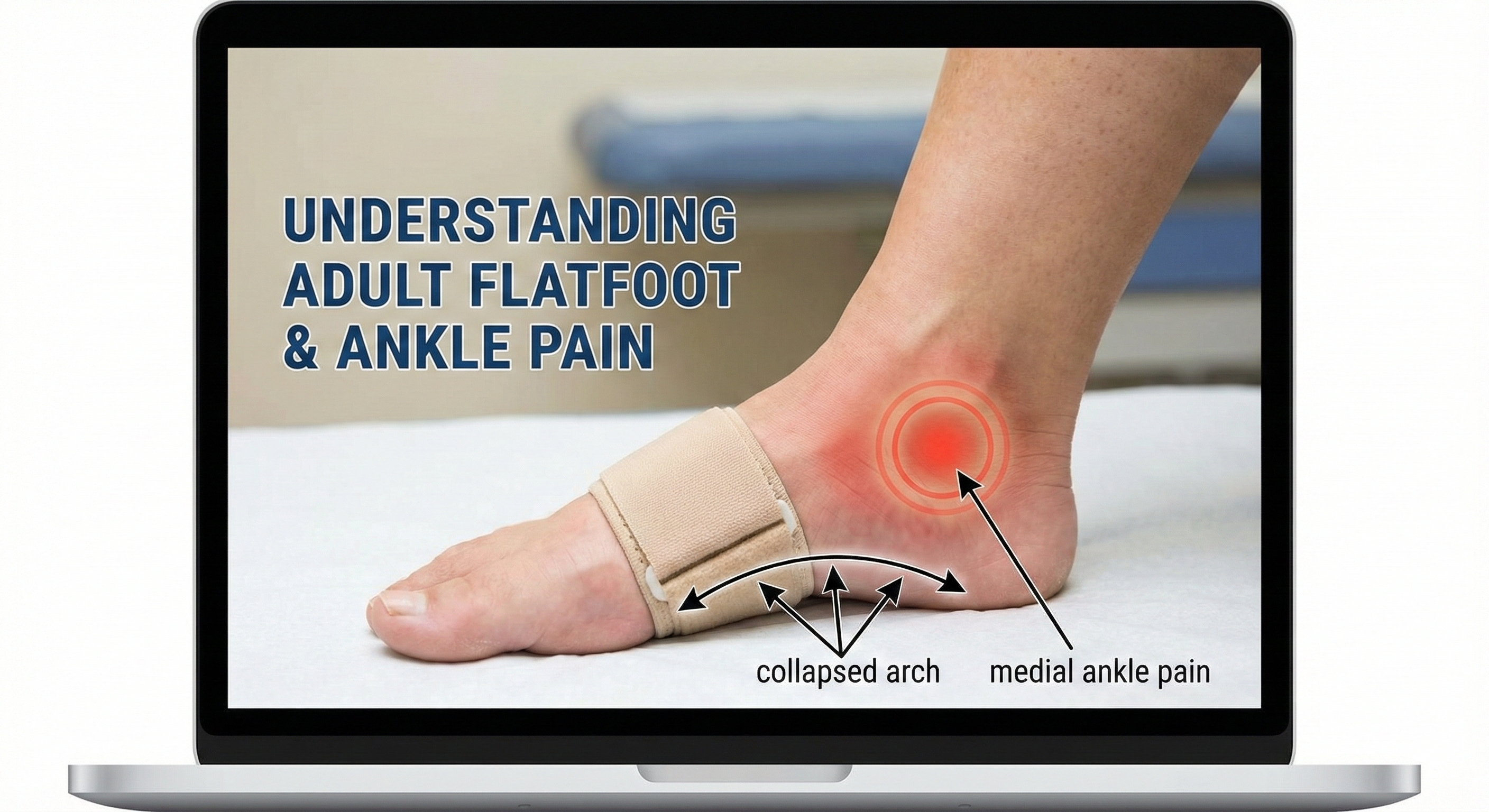
Does weight gain cause flat feet?
This is a common question.
The research suggests that higher body weight is associated with flatter foot posture and increased midfoot loading. However, this does not necessarily mean that weight gain permanently “collapses” the arch in every patient.
There are two important distinctions.
First, a person may have a structurally flatter foot. This means the bones, joints, ligaments, and overall shape of the foot create a naturally lower arch.
Second, a person may have a functionally flatter foot. This means the foot appears to lower or pronate more during weight-bearing, especially when standing or walking.
Weight gain may increase the tendency for the foot to function in a more pronated position. Butterworth et al. reported flatter feet and reduced foot range of motion in obese individuals compared with non-obese individuals (Butterworth et al., 2015).
This is clinically important because pronation itself is not abnormal. Pronation is a normal and necessary movement of the foot. It helps the foot absorb shock and adapt to the ground.
The problem is not pronation alone.
The problem is excessive, prolonged, poorly controlled, or poorly tolerated pronation, especially when combined with increased body weight, weak supporting muscles, poor footwear, long standing hours, or a sudden increase in activity.
Weight gain and plantar fasciitis
Plantar fasciitis, also called plantar heel pain, is one of the most common conditions associated with increased body weight.
The plantar fascia is a strong band of connective tissue that runs from the heel bone toward the toes. It helps support the arch and contributes to the windlass mechanism, which helps stiffen the foot during push-off.
When body weight increases, the plantar fascia may be exposed to greater tensile load. This may be especially relevant in people who also have:
- tight calf muscles
- limited ankle dorsiflexion
- flatter foot posture
- long standing hours
- poor footwear
- sudden increases in walking or exercise
- reduced tissue recovery
Butterworth et al.’s systematic review found that increased BMI was associated with chronic plantar heel pain (Butterworth et al., 2012).
However, plantar fasciitis should not be understood as a simple “too much weight on the heel” problem. It is more complex. It often involves a combination of load, tissue capacity, collagen changes, calf function, arch mechanics, and recovery.
That is why some people develop plantar fasciitis after gaining weight, while others do not.
The plantar fascia and heel pad may change with BMI
Research also suggests that the soft tissues of the heel and arch may adapt to increased body mass.
Taş et al. studied the effects of BMI on the mechanical properties of the plantar fascia and heel pad in asymptomatic participants. The authors reported that increased BMI was associated with increased plantar fascia thickness and changes in heel pad properties (Taş et al., 2017).
This is an important point for patients.
A person may not feel pain immediately when gaining weight. The tissues may adapt for a period of time. But adaptation is not always protective. If the plantar fascia thickens, if the heel pad changes stiffness, or if shock absorption becomes less efficient, the foot may become less tolerant of repetitive load.
This may help explain why heel pain often develops gradually rather than suddenly.
Is foot pain purely mechanical?
No.
This is one of the most important messages for a modern article on weight and foot pain.
More body weight → more force through the foot → more pain.
That explanation is partly correct, but incomplete.
Several studies suggest that fat mass itself may be associated with foot pain, possibly through metabolic or inflammatory mechanisms.
Tanamas et al. examined the relationship between obesity, body composition, and foot pain. The study found that increasing BMI, particularly android fat mass, was strongly associated with foot pain and disability. The authors suggested that both biomechanical and metabolic mechanisms may be involved (Tanamas et al., 2012).
This matters because adipose tissue is not simply inert storage tissue. Fat tissue is biologically active and can contribute to low-grade systemic inflammation. This may influence pain sensitivity, tendon health, fascia, joint irritation, and musculoskeletal symptoms.
This does not mean that inflammation explains all foot pain in people with obesity. But it suggests that the relationship between body weight and foot pain may involve both:
- mechanical loading
- biological tissue sensitivity
This may also explain why some people experience widespread musculoskeletal pain, not just pain in the feet.
Why some heavier people do not have foot pain
A common mistake is to assume that body weight alone determines foot health. It does not.
Many people with higher body weight have no significant foot pain. Some people with lower body weight have severe foot pain. This tells us that body weight is a risk factor, not a complete diagnosis.
Several factors influence whether weight gain results in pain.
1. Tissue capacity
Tissue capacity refers to how much load a structure can tolerate before symptoms develop.
The plantar fascia, tendons, ligaments, joints, fat pads, and muscles all have different capacities. These capacities are influenced by age, training history, genetics, sleep, nutrition, previous injuries, and activity level.
2. Rate of weight gain
Gradual weight gain may allow tissues time to adapt. Rapid weight gain may overwhelm tissue capacity more quickly.
3. Footwear
Supportive footwear can reduce tissue stress. Unsupportive footwear may increase strain, especially during prolonged standing or walking.
4. Occupation
A person who stands for eight hours a day places very different demands on the foot compared with someone who sits most of the day.
5. Muscle strength
The calf muscles, tibialis posterior, peroneal muscles, intrinsic foot muscles, and hip stabilisers all influence foot function. Stronger muscles can help control load and improve gait efficiency.
6. Foot shape and joint mobility
Some foot types are naturally more tolerant of load. Others are more prone to overload, especially if there is excessive pronation, limited ankle dorsiflexion, or forefoot instability.
7. Pain sensitivity and inflammation
Metabolic health, inflammation, stress, poor sleep, and general health can influence how pain is experienced.
This is why the best clinical approach is not to blame weight alone, but to evaluate the whole person.
Book An Appointment
Book An Appointment
Weight gain and the forefoot
Although the midfoot receives much attention, increased body weight can also affect the forefoot.
The forefoot includes the metatarsal heads and toes. It plays a major role in propulsion. During walking, body weight moves from the heel to the midfoot and then forward toward the ball of the foot and toes.
Higher plantar pressure in the forefoot may contribute to:
- metatarsalgia
- callus formation
- pain under the ball of the foot
- neuroma-like symptoms
- toe deformity irritation
- discomfort in narrow shoes
Butterworth et al. reported increased plantar loading in obese individuals, including higher peak plantar pressures during walking (Butterworth et al., 2015).
In clinical practice, this often appears as pain beneath the second, third, or fourth metatarsal heads, especially after prolonged walking or standing.
The issue is not simply pressure. It is pressure combined with repetition, footwear, fat pad quality, toe function, and the ability of the forefoot to share load effectively.
Weight gain, ankle mobility, and gait efficiency
The foot does not work alone. It is part of a kinetic chain involving the ankle, knee, hip, pelvis, and spine.
When body weight increases, gait may change. Some individuals walk with a wider base of support, shorter step length, altered cadence, or reduced ankle motion. These adaptations may improve stability but can also change the way forces move through the foot.
Butterworth et al. found reduced inversion-eversion range of motion in obese individuals. This suggests that obesity may be associated not only with increased pressure, but also with altered foot mobility (Butterworth et al., 2015).
Reduced mobility can be clinically relevant because the foot needs both flexibility and stiffness. Too much motion may create overload. Too little motion may reduce shock absorption and force transfer.
A well-functioning foot must be mobile at the right time and stable at the right time.
Can weight loss improve foot pain?
Research suggests that weight loss can improve foot symptoms, but the mechanism is not always straightforward.
Song et al. conducted a pilot randomised controlled trial examining the effects of weight loss on foot structure and function in obese adults. The study was designed to assess changes in foot structure, gait, and plantar loading following weight loss (Song et al., 2015).
Walsh et al. also studied changes in foot pain, structure, and function after bariatric surgery. Their findings suggest that foot pain and function may improve after substantial weight loss, although improvement may not be fully explained by changes in foot posture or plantar pressure alone (Walsh et al., 2018).
This is important.
Weight loss may help foot pain through several pathways:
- reduced mechanical load
- reduced plantar pressure
- improved mobility
- improved activity tolerance
- reduced systemic inflammation
- improved sleep and general health
- improved confidence with movement
However, patients should not be told that weight loss is the only treatment. Foot pain can and should be treated while a patient works on broader health goals.
Waiting until a patient loses weight before treating their foot pain is poor care. Pain reduces movement. Reduced movement can make weight management harder. Therefore, improving foot comfort may help patients become more active, which may then support healthier weight management.
Can foot pain make weight gain worse?
Yes, this is an important but often overlooked point.
Foot pain can reduce physical activity. When walking becomes painful, people often avoid movement. This can lead to:
- reduced daily step count
- lower cardiovascular fitness
- muscle weakness
- weight gain
- poorer mood
- reduced confidence
- worsening pain sensitivity
This creates a cycle:
Foot pain reduces movement → reduced movement contributes to weight gain → weight gain increases foot load → increased load worsens foot pain.
Breaking this cycle is one of the main goals of treatment.
The clinical aim should not be to shame the patient into weight loss. The aim should be to restore comfortable movement.
Practical treatment approach
A patient with weight-related foot pain usually benefits from a multi-factorial plan. The best treatment depends on the diagnosis, but several principles are broadly useful.
1. Diagnose the specific condition
“Foot pain from weight gain” is not a diagnosis.
The actual diagnosis may be:
- plantar fasciitis
- tibialis posterior tendinopathy
- Achilles tendinopathy
- metatarsalgia
- midfoot arthritis
- fat pad irritation
- stress reaction
- nerve irritation
- inflammatory arthritis
- footwear-related overload
A proper diagnosis matters because each condition requires different treatment.
2. Reduce painful load without complete rest
Complete rest is rarely ideal. Instead, the goal is controlled loading.
This may include:
- reducing long standing periods temporarily
- changing walking routes
- avoiding sudden increases in activity
- using supportive shoes
- using orthotics when indicated
- gradually rebuilding walking tolerance
3. Improve footwear
Good footwear can make a major difference.
Helpful features often include:
- stable heel counter
- firm midsole
- appropriate cushioning
- wide enough toe box
- removable insole
- adequate torsional stability
- appropriate rocker sole in selected cases
Very soft shoes are not always better. Excessively soft footwear may compress too much and increase instability in some patients.
4. Consider orthotics where appropriate
Orthotics do not “fix” every foot problem. But when prescribed correctly, they can help redistribute pressure, support overloaded structures, improve foot posture during gait, and reduce strain on painful tissues.
For patients with increased midfoot loading, plantar fasciitis, tibialis posterior tendon stress, or forefoot overload, orthotics may be especially useful.
5. Strengthen the lower limb
Strengthening should usually include:
- calf strengthening
- tibialis posterior strengthening
- intrinsic foot muscle exercises
- hip and gluteal strengthening
- balance training
- gradual walking progression
The goal is not only to reduce pain but to increase tissue capacity.
6. Address weight compassionately
When weight is relevant, it should be discussed respectfully and clinically.
A useful way to explain it is:
“Your weight may be increasing the load on your feet, but it is not the whole explanation. Our first goal is to reduce pain and improve your ability to move comfortably.”
This keeps the conversation accurate without blaming the patient.
When to seek professional help
Foot pain should be assessed professionally if it:
- lasts more than two to three weeks
- worsens despite rest
- causes limping
- is associated with swelling
- occurs after a sudden increase in activity
- affects daily walking
- causes morning heel pain
- occurs in a person with diabetes
- is associated with numbness, burning, or tingling
- follows trauma
- is severe at night or at rest
So, can foot pain be blamed on weight gain?
Sometimes weight gain is a major contributor. Sometimes it is only one factor. Sometimes it is not the main cause at all.
A fair and evidence-based answer is:
Weight gain can increase the mechanical and biological stress placed on the foot. This can make foot pain more likely, especially in people with pre-existing biomechanical issues, poor footwear, reduced strength, prolonged standing demands, or inflammatory risk factors. But foot pain should not be blamed on weight alone. It should be properly assessed, diagnosed, and treated.
This distinction matters.
Blaming weight alone may cause patients to delay care. It may also make them feel judged rather than helped. A better approach is to explain that the foot has a certain load capacity. When body weight, activity, footwear, and biomechanics exceed that capacity, pain can develop.
The solution is not simply to “lose weight.” The solution is to restore load tolerance.
That may include weight management, but it also includes better footwear, orthotic support, strengthening, gait modification, shockwave therapy in selected cases, and a gradual return to comfortable movement.
Key take-home message
Weight gain can affect the foot in several important ways. It can increase plantar pressure, especially through the midfoot; contribute to flatter dynamic foot function; increase strain on the plantar fascia; alter heel pad mechanics; and increase the likelihood of pain.
But foot pain is rarely caused by one factor alone.
The most useful clinical question is not:
“Is my weight to blame?”
The better question is:
“What has changed in the load placed on my feet, and how can we improve my foot’s ability to tolerate that load?”
That is a more accurate, more compassionate, and more effective way to understand the relationship between weight gain and foot pain.
Frequently asked questions:
Can gaining weight cause plantar fasciitis?
Weight gain can increase the load on the plantar fascia and is associated with chronic plantar heel pain. However, plantar fasciitis usually develops from a combination of factors, including calf tightness, foot posture, footwear, activity level, and tissue capacity.
Does being overweight always cause flat feet?
No. Higher body weight is associated with flatter foot posture and increased midfoot loading, but not everyone with increased body weight develops flat feet or foot pain.
Will losing weight cure foot pain?
Weight loss may improve foot pain in some people, but it is not a guaranteed cure. Foot pain often also requires treatment directed at footwear, strength, mobility, gait, and the specific injured tissue.
Are orthotics useful for weight-related foot pain?
Orthotics may help when pain is related to poor pressure distribution, excessive midfoot loading, plantar fascia strain, or tendon overload. They should be prescribed based on the patient’s foot function and diagnosis.
Should I stop walking if my feet hurt?
Not necessarily. Complete rest is rarely the best long-term solution. It is usually better to reduce painful load temporarily, improve footwear, treat the cause, and gradually rebuild walking tolerance.
Book An Appointment
Disclaimer: The word "treatment" in this article refers to the care and management of a patient’s health to prevent, cure, or improve a condition. Treatment results vary and do not necessarily indicate a cure. This article is for informational and educational purposes only and does not constitute medical advice.
About the Author
Mark B. Reyneker, BTech (Podiatry), MSc (Palaeontology) is a podiatrist and Founder & Clinical Director of Family Podiatry Centre, with more than 25 years of clinical experience across South Africa, Malaysia and Singapore. His clinical interests include foot and lower-limb pain, gait and biomechanics, sports-related foot conditions, orthotic therapy and footwear.
Alongside his clinical practice, Mark conducts research into human gait and foot biomechanics. His MSc research at the University of the Witwatersrand investigated human propulsion and the structural properties of the metatarsals. He is also the inventor of A Foot Orthotic, an orthotic technology developed through an international patent family.
Book An Appointment
Disclaimer: The word "treatment" in this article refers to the care and management of a patient’s health to prevent, cure, or improve a condition. Treatment results vary and do not necessarily indicate a cure. This article is for informational and educational purposes only and does not constitute medical advice.
About the Author
Mark B. Reyneker, BTech (Podiatry), MSc (Palaeontology) is a podiatrist and Founder & Clinical Director of Family Podiatry Centre, with more than 25 years of clinical experience across South Africa, Malaysia and Singapore. His clinical interests include foot and lower-limb pain, gait and biomechanics, sports-related foot conditions, orthotic therapy and footwear.
Alongside his clinical practice, Mark conducts research into human gait and foot biomechanics. His MSc research at the University of the Witwatersrand investigated human propulsion and the structural properties of the metatarsals. He is also the inventor of A Foot Orthotic, an orthotic technology developed through an international patent family.
References:
Recommended posts