The Best Shoe For Plantar Fasciitis



26 March 2026
By Mark Reyneker, BTech (Podiatry), MSc (Palaeontology), Registered Podiatrist, Foot & Gait Specialist | Founder & Clinical Director, Family Podiatry Centre
Explainer Video
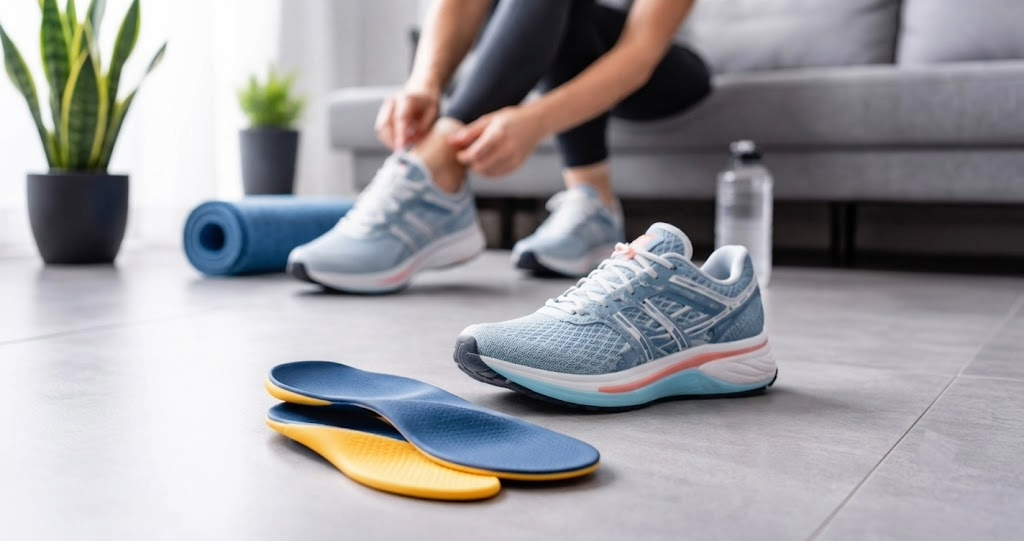
There is currently no evidence-based clinical protocol showing that a specific branded shoe treats plantar fasciitis. The best available evidence supports education, stretching, taping, activity modification, and stepped care such as shockwave therapy and orthoses when required. Shoes are better understood as sports equipment and load-management tools: they may help reduce irritation, but they are not, by themselves, the treatment.
Social media is full of confident claims that a particular trainer or running shoe is “the best shoe for plantar fasciitis.” Popular names such as the ASICS Gel Kayano, HOKA Bondi, or various stability shoes are often presented as though they are treatments in their own right. That is appealing advice because it is simple, concrete, and easy to buy. Just the way that "5 minutes daily for rock hard abs!" sounds easy and simple. Unfortunately, the problem is far more nuanced than that.
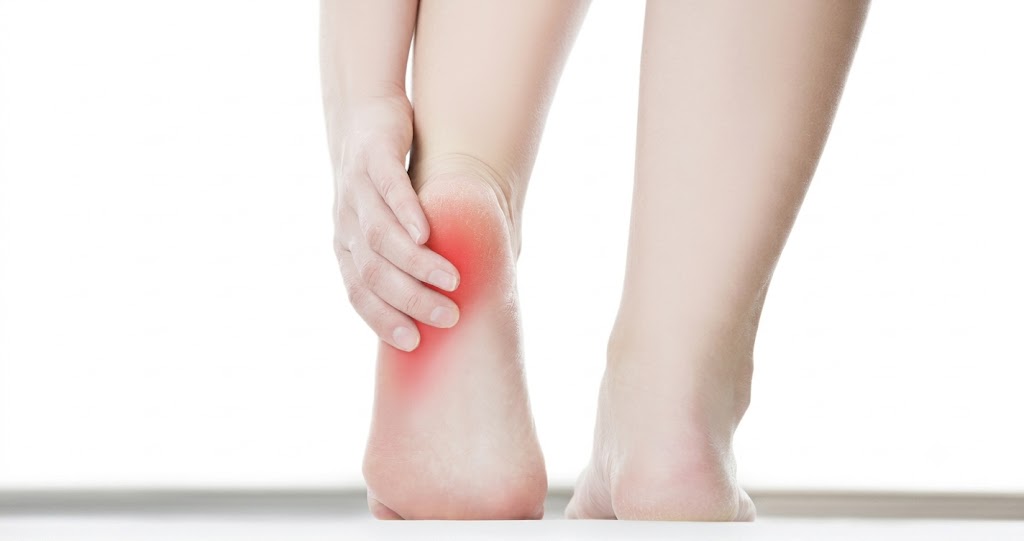
From a clinical perspective, plantar fasciitis—more accurately called plantar heel pain in much of the modern literature—is not usually managed by prescribing a branded shoe in the way one might prescribe a medicine or a structured therapy. Current evidence-based guidance does not support the idea that there is a single shoe that “treats” plantar fasciitis. Instead, footwear is best understood as one part of a broader load-management strategy.
There are multiple medical and scientific guidelines for clinicians to follow when presented with a patient who is experiencing heel pain. The most relevant once are listed below in the references.
A 2021 best-practice guide that integrated a systematic review, expert clinical reasoning, and patient values concluded that the core treatment for plantar heel pain should include taping, stretching, and individualised education. If patients do not improve sufficiently, shockwave therapy may be added, followed later by custom orthoses when needed. In that paper, footwear appears as part of self-management advice, not as a primary treatment or as a recommendation for any specific commercial shoe model (Morrissey et al., 2021).
Similarly, the 2023 heel pain clinical practice guideline from JOSPT does not present footwear as a stand-alone cure. The guideline discusses supportive shoes and orthoses within a broader management framework, and its abstracted guidance explicitly states that clinicians should not use orthoses as an isolated treatment for short-term pain relief. That is important because even orthoses—which have more direct clinical relevance than retail shoes—are not recommended as a solitary answer (Koc et al., 2023).
A 2024 Singapore consensus guideline likewise set out a full management pathway for plantar fasciitis and addressed diagnosis, risk factors, treatment modalities, monitoring, and return to activity. Again, the framework is multidisciplinary and progressive; it does not establish a protocol in which a specific sports shoe is prescribed as the treatment (Tan et al., 2024).
Another area of research has examined shoe design features rather than brand names. A recent study found that certain shoe and insert properties could reduce heel pressure and improve comfort in women with plantar heel pain, but the authors also noted that limited data exist to guide footwear design and recommendations. In other words, footwear characteristics may influence symptoms, but the evidence is still not strong enough to support simplistic claims that one commercial model is “the treatment” (Hurn et al., 2025).
What Is Our View At the Family Podiatry Centre?
The Family Podiatry Centre practices evidence based protocols to manage patient foot and lower limb pain. We use data gathered from a clinical examination, video gait analyses and novel-EMED foot forces mapping to accurately diagnose a condition like plantar heel pain. We know and understand that shoes form a very important part of managing heel pain. However, we also understand from scientific evidence and 24 years of clinical practice that different types of shoes have different effects on different people because we are human. Humans have so much variation in foot and lower limb function. There are people who weigh 100kg and some who weigh 40kg, some have broad shoulders while other have narrow shoulders, wide feet and tiny feet, feet that pronate excessively and others that supinate excessively, super fit and sedentary; the list of variations go on and on. A shoe must therefore be recommended based on all these factors. That is why there are so many shoe variations. It is impossible to have a best shoe brand and model for a specific foot health condition.
Book An Appointment
Disclaimer: The word "treatment" in this article refers to the care and management of a patient’s health to prevent, cure, or improve a condition. Treatment results vary and do not necessarily indicate a cure. This article is for informational and educational purposes only and does not constitute medical advice.
About the Author
Mark B. Reyneker, BTech (Podiatry), MSc (Palaeontology) is a podiatrist and Founder & Clinical Director of Family Podiatry Centre, with more than 25 years of clinical experience across South Africa, Malaysia and Singapore. His clinical interests include foot and lower-limb pain, gait and biomechanics, sports-related foot conditions, orthotic therapy and footwear.
Alongside his clinical practice, Mark conducts research into human gait and foot biomechanics. His MSc research at the University of the Witwatersrand investigated human propulsion and the structural properties of the metatarsals. He is also the inventor of A Foot Orthotic, an orthotic technology developed through an international patent family.
References:
1. Hurn, S.E., Smith, M.M.F., Bonanno, D.R., Richter, C. and Menz, H.B. (2025) ‘Immediate effects of footwear design on in-shoe plantar pressures, impact forces and comfort in women with plantar heel pain’, Journal of Foot and Ankle Research.
Frequently Asked Questions
While soft or memory-foam shoes feel comfortable initially, excessive squishiness lacks structural stability. Without a firm arch structure, a rigid heel counter, and torsional midfoot stiffness, extremely soft soles can allow the arch to collapse and overstretch the plantar fascia, increasing strain during walking.
It is often a combination of both rather than an either/or choice. Supportive footwear provides a stable foundation, but ready-made shoes offer generalized support. Custom orthotics are tailored specifically to your unique foot geometry and gait mechanics, and they work best when placed inside a stable shoe with a removable insole.
No. Current evidence-based clinical guidelines show that no single shoe brand or model acts as a direct cure or standalone treatment for plantar fasciitis. Shoes are best understood as load-management tools and sports equipment that reduce strain and irritation while your foot heals through proper clinical care.