Why Is Heel Pain So Common?




29 March 2026

Heel pain is one of the most common foot complaints seen in podiatry and primary care. In most cases, the cause is mechanical, and plantar heel pain or plantar fasciitis is among the most frequent diagnoses when pain is felt under the heel, especially during the first steps after rest (Tu, 2018). Population studies also show that plantar heel pain is common and can significantly affect mobility, daily activity and quality of life (Thomas et al., 2019; Rasenberg et al., 2019). For patients searching online for answers about heel pain in Singapore, plantar fasciitis treatment in Malaysia, heel pain in Indonesia, or podiatry care in Hong Kong, one question often sits underneath all the others: why is heel pain so common in humans in the first place?
An evolutionary view offers an interesting answer. The human foot is not a weak or poorly made structure. It is a highly specialised organ of locomotion that evolved to carry the full weight of the body during upright walking and running. The heel, arch and plantar fascia are central to that function. In other words, the same structures that make efficient bipedal movement possible are also structures that can become painful when they are repeatedly overloaded or asked to do more than they can currently tolerate (Sichting et al., 2020).
The human foot evolved for function
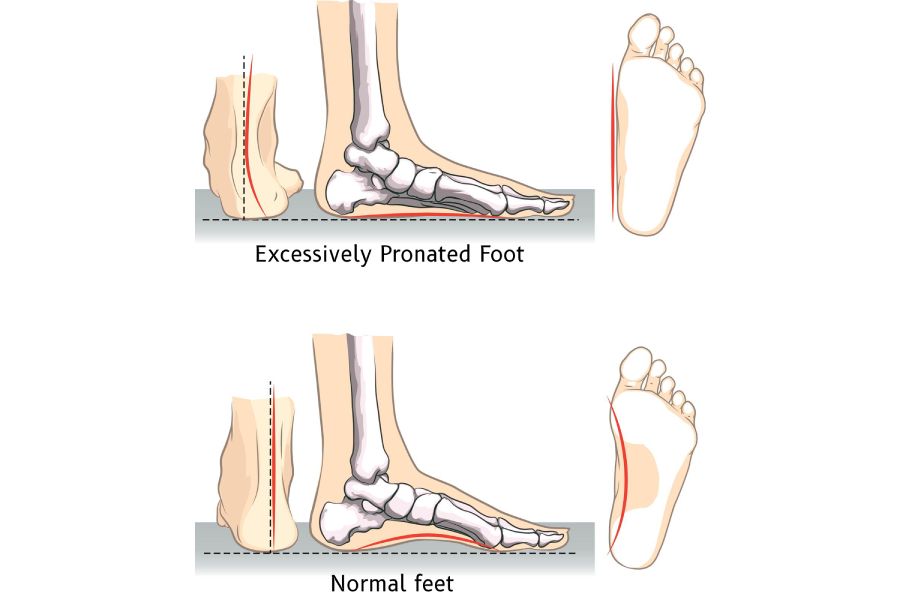
Human feet differ markedly from the feet of other primates. Over evolutionary time, the foot became less suited for grasping and more suited for weight transfer, stability and forward propulsion on the ground. One of the most important structures in this transformation is the plantar aponeurosis, commonly referred to in clinical settings as part of the plantar fascia complex. Comparative anatomical work suggests that this structure is closely linked to terrestrial locomotion and to the mechanical demands of human bipedalism (Sichting et al., 2020).
This matters because the plantar fascia is not simply a tissue that becomes inflamed for no reason. It helps support the arch, contributes to foot stiffness during push-off and assists with elastic energy transfer during gait. In short, it is part of the reason human walking and running can be so efficient. From that perspective, plantar heel pain is better understood not as evidence of a flawed foot, but as the consequence of stressing an important load-bearing structure beyond its present capacity (Sichting et al., 2020; Tseng et al., 2023).
Why would evolution leave us prone to heel pain?
Evolution does not create perfection. It creates structures that are effective enough for survival and reproduction within a given environment. The human heel functions extremely well overall, but it also accepts substantial repetitive load. Biomechanical modelling has shown that the calcaneus, or heel bone, experiences considerable internal stresses during both walking and running (Giddings et al., 2000). Developmental work further suggests that heel-loading patterns help shape calcaneal adaptation over time, reinforcing the idea that the human heel is a structure built to handle regular impact, but not necessarily unlimited or rapidly changing demand (Zeininger et al., 2018).
That means common heel pain is not necessarily a sign of bad design. It may instead reflect an evolutionary trade-off. To become efficient bipeds, humans evolved a robust heel, a tensioned arch system and a foot that shifts from flexibility at contact to stiffness during propulsion. These are remarkable features, but they also create a region that can become symptomatic when loading patterns change, body weight increases, standing time rises, running volume escalates, calf flexibility is reduced, or tissue conditioning falls behind mechanical demand (Tu, 2018; Tseng et al., 2023).
Is heel pain really caused by shoes?
This is a common question, and the honest answer is: not entirely.
There is no strong scientific basis for saying that shoes alone are the reason heel pain is so common. Clinical reviews describe plantar heel pain as multifactorial, with contributors that may include repetitive stress, limited ankle dorsiflexion, tissue degeneration, body mass, training load and occupational standing demands (Tu, 2018; Tseng et al., 2023). Many patients with heel pain improve without changing to a radically different shoe type, which tells us that footwear is only one part of a larger picture.
That said, footwear may still matter. Some researchers have proposed an evolutionary mismatch model, suggesting that human feet evolved under very different conditions from those created by some modern footwear and hard-surface living. Work on barefoot and minimally shod running has shown that foot strike pattern and footwear can alter loading mechanics, and some authors argue that modern footwear may contribute to patterns that do not fully match ancestral foot function (Davis, 2022). This does not prove that shoes cause plantar heel pain in every person, but it does support the idea that footwear can influence how load is distributed through the foot and heel.
So, are shoes to blame? Not in a simplistic way. Poorly selected footwear may aggravate symptoms in some people, especially when it fails to match the person’s activity, foot shape or tissue tolerance. Equally, well-chosen footwear may reduce irritation and improve comfort. For patients in Singapore, Malaysia, Indonesia and Hong Kong, where many people spend long hours standing at work, walking on hard urban surfaces, or alternating between dress shoes, sandals and athletic footwear, the interaction between tissue load and footwear choice can become especially important. That is not the same as saying that shoes are the root cause. It is more accurate to say that shoes can modify the stresses already passing through a mechanically demanding structure (Tu, 2018; Davis, 2022).
Is heel pain a sign of weakness?
Not in the simplistic sense.
Patients are sometimes told they have weak feet, but heel pain is usually more complex than that. Plantar heel pain is better understood as a problem of load versus capacity. Sometimes the tissues are underprepared. Sometimes the load has increased too quickly. Sometimes age-related tissue change, calf tightness, reduced foot strength, prolonged standing, weight gain or a sudden return to exercise all contribute. A painful heel does not mean the foot is badly designed. It means that a highly specialised tissue system is struggling with the demands currently being placed upon it (Tu, 2018; Tseng et al., 2023).
From an evolutionary point of view, that is an important distinction. The human foot is not a fragile failure. It is a durable, high-performance structure that usually works extremely well. But like any sophisticated load-bearing system, it has limits. When those limits are exceeded, pain can develop. That makes heel pain less a story of weakness, and more a story of mismatch between demand, recovery and adaptation (Sichting et al., 2020).
Why heel pain feels so common today
Modern life may help explain why heel pain seems so widespread. Many people now spend long periods standing on hard floors, walking on pavement, gaining weight, exercising in bursts rather than progressively, or spending much of the day in shoes that may not always suit their needs. These are not necessarily “unnatural” conditions in a dramatic sense, but they can create repeated mechanical demands that the heel and plantar tissues must absorb day after day. If tissue recovery and load management do not keep pace, symptoms can emerge (Rasenberg et al., 2019; Thomas et al., 2019).
This helps explain why heel pain is common across a wide range of adults, from office workers and teachers to runners and older adults. It is not just a sports injury, and it is not just a footwear problem. It is a common outcome in a structure that plays a central role in human locomotion and absorbs significant forces every day (Thomas et al., 2019; Giddings et al., 2000).
What this means for treatment
The evolutionary perspective is useful because it encourages a balanced clinical view. Heel pain is not best treated by blaming one single cause or by promising that one shoe, one insert or one exercise will fix every case. Instead, good care starts with proper diagnosis, understanding the source of load, assessing tissue capacity and selecting treatment based on the individual. Conservative treatment remains the mainstay for most cases, and management typically focuses on reducing irritation while improving the foot’s ability to tolerate demand (Tu, 2018).
For patients looking for heel pain treatment in Singapore, plantar fasciitis care in Malaysia, podiatry treatment in Indonesia, or heel pain relief in Hong Kong, the most helpful message is often this: your foot is not weak, broken or poorly made. More often, your heel is telling you that one of the hardest-working structures in your body needs a better balance between stress and support.
Conclusion
Heel pain is common because the human heel sits at the centre of one of evolution’s most demanding mechanical achievements: upright bipedal locomotion. The heel, arch and plantar fascia are not signs of weakness or bad design. They are specialised structures that usually work brilliantly, but which can become painful when loading, recovery, conditioning and environment fall out of balance. Shoes may influence that balance, but heel pain is not simply caused by shoes. A more scientifically grounded view is that plantar heel pain reflects the cost of asking a remarkable structure to do a great deal under modern conditions that vary from person to person (Sichting et al., 2020; Tu, 2018; Tseng et al., 2023).
Disclaimer: The word "treatment" in this article refers to the care and management of a patient’s health to prevent, cure, or improve a condition. Treatment results vary and do not necessarily indicate a cure.
Disclaimer: The word "treatment" in this article refers to the care and management of a patient’s health to prevent, cure, or improve a condition. Treatment results vary and do not necessarily indicate a cure.
References:
B.T. Pod (SA), MSc (SA)
Podiatrist and Human Gait Specialist
Registered with the Podiatry Association of Singapore
Founder and Director:
Family Podiatry Centre Pte Ltd
Family Podiatry Centre Sdn Bhd
Solescape Orthotics Laboratory
Solescape Shoes brand