The Incredible Engineering of the Human Foot



6 April 2026
By Mark Reyneker, BTech (Podiatry), MSc (Palaeontology), Registered Podiatrist, Foot & Gait Specialist | Founder & Clinical Director, Family Podiatry Centre
Published: 6 April 2026 | Last reviewed: 5 June 2026
Explainer video
Have you ever stopped to wonder why your feet look so different from your hands? While we often take our ability to walk and run for granted, your feet are actually highly specialized pieces of evolutionary engineering. By looking at our closest relatives, the great apes, and our ancient ancestors, we can begin to appreciate the "marvel" that is the human foot.
Explainer video
Have you ever stopped to wonder why your feet look so different from your hands? While we often take our ability to walk and run for granted, your feet are actually highly specialized pieces of evolutionary engineering. By looking at our closest relatives, the great apes, and our ancient ancestors, we can begin to appreciate the "marvel" that is the human foot.
Built for the Ground, Not the Branches
The primary difference between a human foot and an ape foot comes down to our lifestyle. Great apes, like chimpanzees and gorillas, have feet designed for grasping branches in the trees. Their big toes are "opposable"—much like our thumbs—allowing them to grip.
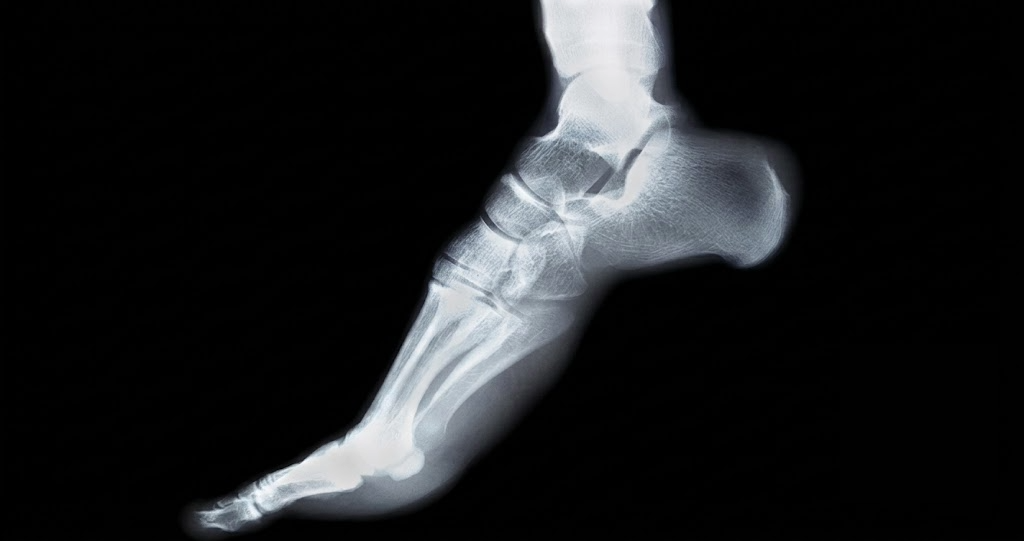
In contrast, humans have traded that gripping ability for stability and efficiency on the ground. Our big toes are aligned with our other toes, and our heel bones (the calcaneus) are much larger and more robust. This allows us to use a "heel-strike" walking style, which is incredibly energy-efficient because it helps roll our body weight forward with minimal effort.
The Secret of the Arch: A Built-in Spring
One of the most unique features of the human foot is the longitudinal arch. For a long time, scientists thought the arch was just a "stiff lever" that helped us push off the ground. However, recent research shows it does much more: it acts like a spring.
When you run, your arch flattens slightly to absorb energy and then "snaps" back, returning that energy to your stride. This "spring" mechanism can save about 17% of the energy required to support your body weight while running. Interestingly, while the arch is a powerhouse for running, it doesn't actually act as a spring during normal walking.
Why Are Our Toes So Short?
If you look at a chimpanzee’s foot, their toes are long and curved. Human toes are remarkably short by comparison. Why the change? As it turns out, short toes are an adaptation for running. When we push off the ground during a run, long toes would act like long levers, putting massive amounts of strain on our digital flexor muscles. By evolving shorter toes, our ancestors were able to run longer distances without their foot muscles tiring out.
A Three-Step Evolutionary Journey
Our feet didn't change overnight. Scientists believe we went through three major stages to get where we are today:
- The Tree-Dweller with a Twist: Early ancestors (like Ardipithecus) had feet that looked like an ape's, with a thumb-like big toe for climbing, but with a slightly longer midfoot that made walking on the ground a bit easier.
- The Transitional Walker: Species like "Lucy" (Australopithecus afarensis) had a foot that was a mosaic. They likely had a low arch and could walk on their heels like us, but they still kept slightly longer toes and a more mobile big toe for climbing.
3.The Endurance Runner: With the appearance of the genus Homo (our direct ancestors), the foot became fully modern. We lost the ability to grasp branches and gained a high arch and short toes—features specifically designed for long-distance walking and running.
Why This Matters for You
Understanding the evolution of the foot helps us understand why certain foot problems occur. Our feet are designed to be dynamic—using a combination of stiff arches, strong muscles, and elastic ligaments to move us through the world. Whether you are a casual walker or a marathon runner, your feet are the result of millions of years of fine-tuning for life on two legs.
If you’re experiencing foot pain or want to optimize your "evolutionary springs," come visit our clinic for a biomechanical assessment.
Book An Appointment
Disclaimer: The word "treatment" in this article refers to the care and management of a patient’s health to prevent, cure, or improve a condition. Treatment results vary and do not necessarily indicate a cure. This article is for informational and educational purposes only and does not constitute medical advice.
About the Author
Mark B. Reyneker, BTech (Podiatry), MSc (Palaeontology) is a podiatrist and Founder & Clinical Director of Family Podiatry Centre, with more than 25 years of clinical experience across South Africa, Malaysia and Singapore. His clinical interests include foot and lower-limb pain, gait and biomechanics, sports-related foot conditions, orthotic therapy and footwear.
Alongside his clinical practice, Mark conducts research into human gait and foot biomechanics. His MSc research at the University of the Witwatersrand investigated human propulsion and the structural properties of the metatarsals. He is also the inventor of A Foot Orthotic, an orthotic technology developed through an international patent family.
References:
1. Nicholas B. Holowka, Daniel E. Lieberman; Rethinking the evolution of the human foot: insights from experimental research. J Exp Biol 1 September 2018; 221 (17): jeb174425. doi: https://doi.org/10.1242/jeb.174425
Book An Appointment
Disclaimer: The word "treatment" in this article refers to the care and management of a patient’s health to prevent, cure, or improve a condition. Treatment results vary and do not necessarily indicate a cure. This article is for informational and educational purposes only and does not constitute medical advice.
About the Author
Mark B. Reyneker, BTech (Podiatry), MSc (Palaeontology) is a podiatrist and Founder & Clinical Director of Family Podiatry Centre, with more than 25 years of clinical experience across South Africa, Malaysia and Singapore. His clinical interests include foot and lower-limb pain, gait and biomechanics, sports-related foot conditions, orthotic therapy and footwear.
Alongside his clinical practice, Mark conducts research into human gait and foot biomechanics. His MSc research at the University of the Witwatersrand investigated human propulsion and the structural properties of the metatarsals. He is also the inventor of A Foot Orthotic, an orthotic technology developed through an international patent family.
References:
1. Nicholas B. Holowka, Daniel E. Lieberman; Rethinking the evolution of the human foot: insights from experimental research. J Exp Biol 1 September 2018; 221 (17): jeb174425. doi: https://doi.org/10.1242/jeb.174425