How many bones are there in the human foot?



17 July 2024
By Mark Reyneker, BTech (Podiatry), MSc (Palaeontology), Registered Podiatrist, Foot & Gait Specialist | Founder & Clinical Director, Family Podiatry Centre
What’s a foot?
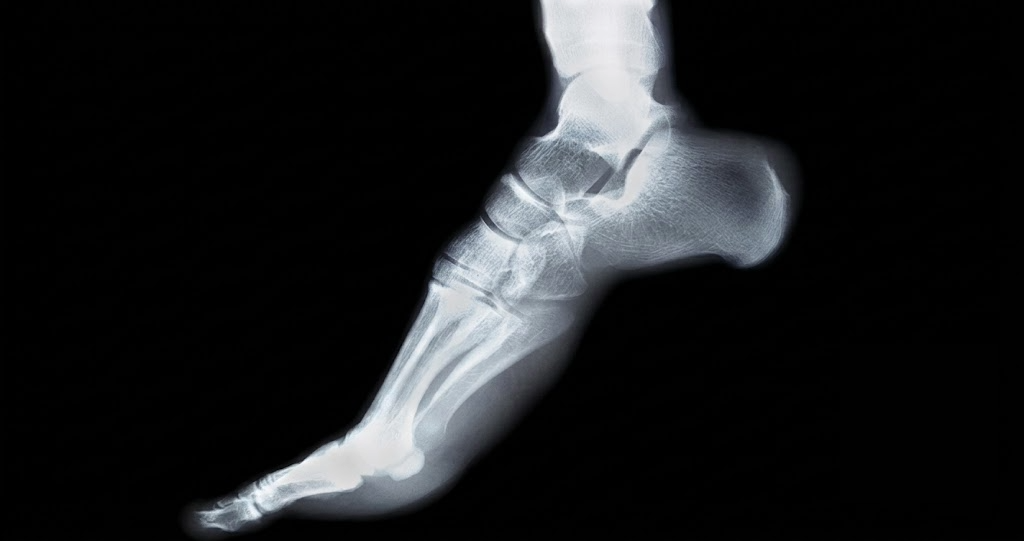
The tarsus, metatarsus, and phalanges constitute the skeleton of the foot. In the rear part of the foot, you have the talus and the calcaneus. Moving forward from there, you will find the 3 cuneiform bones, and the cuboid. In the middle, you will find the navicular and towards the front you will find the metatarsals. After the metatarsals come the phalanges which are found in the toes.
All these bones fit neatly together to create three arches of the foot. The medial longitudinal arch, the lateral longitudinal arch and anterior transverse arch.
The structure of the bones of the human foot together with its alignment has been a key area of interest amongst physical anthropologists. The foot is believed to have played a key role in the development of striding bipedalism. Striding bipedalism, describes how we walk as modern humans today. It is a process in which weight is transferred in a very specific manner through the foot for us to be able to walk as well as we do.
The ‘design’ of our foot bones can be said to be one of the key features that makes us human.
Book An Appointment
Disclaimer: The word "treatment" in this article refers to the care and management of a patient’s health to prevent, cure, or improve a condition. Treatment results vary and do not necessarily indicate a cure. This article is for informational and educational purposes only and does not constitute medical advice.
About the Author
Mark B. Reyneker, BTech (Podiatry), MSc (Palaeontology) is a podiatrist and Founder & Clinical Director of Family Podiatry Centre, with more than 25 years of clinical experience across South Africa, Malaysia and Singapore. His clinical interests include foot and lower-limb pain, gait and biomechanics, sports-related foot conditions, orthotic therapy and footwear.
Alongside his clinical practice, Mark conducts research into human gait and foot biomechanics. His MSc research at the University of the Witwatersrand investigated human propulsion and the structural properties of the metatarsals. He is also the inventor of A Foot Orthotic, an orthotic technology developed through an international patent family.
Frequently Asked Questions
There are 26 bones in the human foot. However, if you include the two tiny sesamoid bones, there are 28 bones in total.
The skeleton of the foot is primarily constituted by three main group such as the tarsus, the metatarsus, and the phalanges.
The sesamoid bones are two tiny bones located underneath the ball of the big toe. They are often excluded when counting the standard number of foot bones.
In the rear of the foot, you have the talus and calcaneus. Moving forward, there are three cuneiform bones and the cuboid. In the middle is the navicular, and towards the front are the metatarsals, followed by the phalanges which make up the toes.
The bones of the foot fit together to create three distinct arches such as the medial longitudinal arch, the lateral longitudinal arch, and the anterior transverse arch.
The design and alignment of our foot bones play a key role in "striding bipedalism," which is how modern humans walk. It allows weight to be transferred in a specific manner so we can walk efficiently.