Does Cigna Cover Ingrown Toenail Treatment by a Podiatrist in Singapore?



3 May 2026
By Mark Reyneker, BTech (Podiatry), MSc (Palaeontology), Registered Podiatrist, Foot & Gait Specialist | Founder & Clinical Director, Family Podiatry Centre
Written by Mark Reyneker, B.T. Pod (SA), MSc (SA)
Registered Podiatrist & Human Gait Specialist
Founder / Clinical Director, Family Podiatry Centre
Published: 3 May 2026 | Last reviewed: 5 June 2026
Ingrown toenails are one of the most common and painful nail problems treated by podiatrists. For some patients, the problem may settle with conservative care. For others, particularly when the nail repeatedly digs into the skin, becomes infected, or causes ongoing pain, a minor nail procedure may be required.
Registered Podiatrist & Human Gait Specialist
Founder / Clinical Director, Family Podiatry Centre
Published: 3 May 2026 | Last reviewed: 5 June 2026
Ingrown toenails are one of the most common and painful nail problems treated by podiatrists. For some patients, the problem may settle with conservative care. For others, particularly when the nail repeatedly digs into the skin, becomes infected, or causes ongoing pain, a minor nail procedure may be required.
A common question we receive from patients is:
“Does Cigna cover ingrown toenail treatment by a podiatrist in Singapore?”
The answer is: possibly, but it depends on your specific Cigna plan, the type of treatment required, and whether the treatment is considered routine footcare, podiatry care, or a minor surgical procedure.
Why the answer is not always straightforward
Insurance coverage for podiatry treatment is often more specific than patients expect. Some policies cover certain foot conditions but exclude others. Some plans cover podiatry consultations only under an outpatient option. Other plans may exclude routine footcare but still cover medically necessary minor surgical procedures.
For this reason, it is important not to assume that all ingrown toenail treatment is automatically covered.
In Cigna’s Singapore product summary, the section titled “Footcare by a Chiropodist or Podiatrist” states that Cigna will pay for treatment of bunions, calluses, corns and fungal infection when the treatment is medically necessary and restorative in nature, and when it helps the patient carry out normal activities of daily living (Cigna Healthcare, 2026a). The treatment must also be carried out by a properly qualified chiropodist or podiatrist who is licensed in the country where treatment is received (Cigna Healthcare, 2026a).
However, ingrown toenails are not specifically listed in that footcare benefit wording.
That does not necessarily mean that ingrown toenail treatment is never covered. It means the claim may need to be considered under a different benefit category, particularly if a minor surgical procedure is required.
Routine footcare versus medically necessary treatment
There is an important difference between routine nail care and treatment for a painful or infected ingrown toenail.
Routine footcare may include general nail trimming, cosmetic nail care, or maintenance care where there is no significant medical problem. Many insurance policies are cautious about covering this type of care.
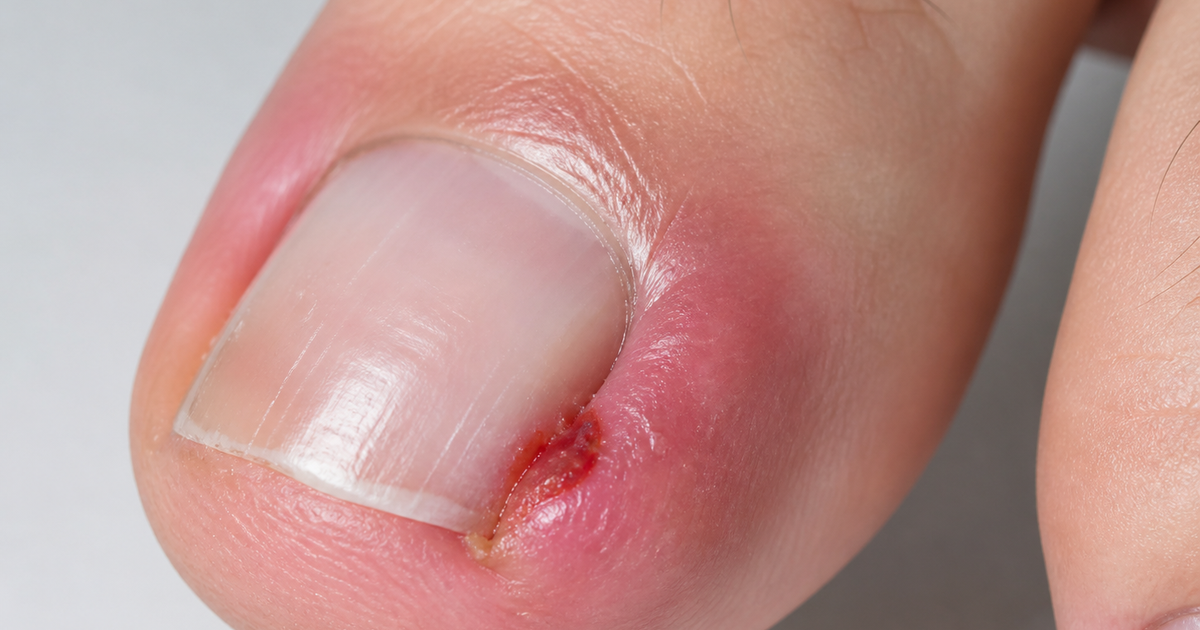
An ingrown toenail, however, can be a medical condition. It may cause pain, inflammation, recurrent infection, difficulty wearing shoes, difficulty walking, and disruption to daily activities. In more severe cases, the nail edge penetrates the surrounding skin and may require a minor procedure to remove the offending section of nail.
This distinction matters because insurance companies often assess whether the treatment is medically necessary, rather than simply whether it involves the foot or toenail.
What Cigna says about podiatry footcare in Singapore
Cigna’s Singapore Product Summary describes a benefit for Footcare by a Chiropodist or Podiatrist. Under this section, Cigna states that it will pay for treatment of bunions, calluses, corns and fungal infection if the treatment is medically necessary and restorative in nature, helping the beneficiary carry out normal activities of daily living (Cigna Healthcare, 2026a).
The listed benefit limits in the 2026 Singapore Product Summary are:
Plan level
Footcare by chiropodist or podiatrist benefit
Silver | US$325 / €250 / £220, up to 5 sessions
Gold | US$650 / €500 / £440, up to 10 sessions
Platinum | Paid in full, up to 20 sessions
Footcare by chiropodist or podiatrist benefit
Silver | US$325 / €250 / £220, up to 5 sessions
Gold | US$650 / €500 / £440, up to 10 sessions
Platinum | Paid in full, up to 20 sessions
These limits apply per beneficiary per period of cover, according to the product summary (Cigna Healthcare, 2026a).
The important point is that this section names bunions, calluses, corns and fungal infection, but does not specifically name ingrown toenails. Therefore, if a patient is attending a podiatrist for conservative ingrown toenail care, the claim may not fall neatly within this listed footcare benefit.
What Cigna says about ingrown toenail surgery
Cigna’s guidance on minor surgical procedures is more relevant when an ingrown toenail requires a procedure.
Cigna describes minor surgical procedures as procedures that do not require general anaesthesia or an overnight stay. In Cigna’s own wording, examples include surgical treatment of an ingrown toenail (Cigna Healthcare, 2026b).
This is important because it means that when an ingrown toenail requires a procedure, the treatment may be more appropriately assessed as a minor surgical procedure rather than ordinary footcare.
In clinical practice, this may include procedures such as partial nail avulsion, where the painful edge of the nail is removed. In recurrent cases, a chemical or surgical matrix procedure may be performed to reduce the chance of that section of nail growing back.
These procedures are commonly performed under local anaesthetic and usually do not require general anaesthesia or an overnight hospital stay. That makes them consistent with the general concept of a minor surgical procedure.
So, does Cigna cover ingrown toenail treatment in Singapore?
A careful answer is:
Cigna may cover ingrown toenail treatment in Singapore if it is medically necessary and especially if it is treated as a minor surgical procedure. However, routine or conservative podiatry nail care for ingrown toenails is not clearly listed under Cigna’s Singapore podiatry footcare benefit.
This means there are two practical scenarios.
1. Conservative ingrown toenail care
If the treatment involves simple nail care, trimming, packing, advice, or conservative management, the claim may be considered podiatry or footcare. In Cigna’s Singapore Product Summary, the podiatry footcare benefit specifically names bunions, calluses, corns and fungal infection, but not ingrown toenails (Cigna Healthcare, 2026a).
Therefore, conservative care for an ingrown toenail may require individual claim assessment and should not be assumed to be covered.
2. Minor surgical treatment for an ingrown toenail
If the ingrown toenail requires a minor surgical procedure, there is a stronger basis for checking coverage under Cigna’s minor surgery or outpatient surgical benefits. This is because Cigna’s guidance specifically gives surgical treatment of an ingrown toenail as an example of a minor surgical procedure (Cigna Healthcare, 2026b).
Patients should still confirm this directly with Cigna before treatment, because benefits vary depending on the exact policy, plan level, outpatient benefits, exclusions, pre-authorisation requirements and annual limits.
What should patients do before treatment?
Before attending for treatment, patients with Cigna insurance should ideally contact Cigna and ask for written confirmation of whether their specific plan covers the proposed treatment.
Useful questions to ask Cigna include:
- Does my plan cover podiatry treatment in Singapore?
- Does my plan cover treatment by a Singapore-registered podiatrist?
- Does my plan cover treatment for an ingrown toenail?
- If nail surgery is required, is it covered under outpatient minor surgical procedures?
- Is pre-authorisation required?
- Do I need a referral from a general practitioner or specialist?
- Are there limits, co-payments, deductibles or session caps?
- What documents are required for reimbursement?
Patients should also check whether their plan is a local Singapore group plan, an international medical insurance plan, or a company-specific corporate plan. Coverage can differ significantly between these types of policies.
What documents may help support a claim?
Although each insurer has its own requirements, patients are commonly asked to provide:
- a diagnosis;
- a clinical receipt or invoice;
- the provider’s details and qualifications;
- a description of the procedure performed;
- confirmation that the treatment was medically necessary;
- photographs or clinical notes, if requested;
- proof of payment;
- a completed claim form.
If a procedure is required, it may be useful for the invoice or clinical report to describe the treatment accurately as treatment for a symptomatic ingrown toenail, rather than simply “routine nail care”.
Why early treatment matters
Patients often delay treatment for ingrown toenails because they hope the nail will grow out on its own. In mild cases, conservative measures may help. However, recurrent or infected ingrown toenails often worsen over time, especially when footwear pressure, nail shape, trauma, sports activity, or repeated self-cutting aggravates the nail fold.
Early assessment by a podiatrist can help determine whether the problem is suitable for conservative care or whether a minor procedure is likely to provide a more definitive solution.
Key takeaway
Cigna’s Singapore podiatry footcare wording does not specifically list ingrown toenails under the named podiatry conditions. It lists bunions, calluses, corns and fungal infection (Cigna Healthcare, 2026a). However, Cigna’s guidance on minor surgical procedures specifically includes surgical treatment of an ingrown toenail as an example of a minor surgical procedure (Cigna Healthcare, 2026b).
For this reason, patients should not assume that all ingrown toenail treatment is automatically covered. The safest approach is to obtain written confirmation from Cigna before treatment, especially if a nail procedure is required.
At Family Podiatry Centre, we can provide patients with the necessary clinical information and documentation to support their insurance enquiry or claim. However, final approval always depends on the patient’s individual policy and Cigna’s claims assessment.
Book An Appointment
Disclaimer: The word "treatment" in this article refers to the care and management of a patient’s health to prevent, cure, or improve a condition. Treatment results vary and do not necessarily indicate a cure. This article is for informational and educational purposes only and does not constitute medical advice.
About the Author
Mark B. Reyneker, BTech (Podiatry), MSc (Palaeontology) is a podiatrist and Founder & Clinical Director of Family Podiatry Centre, with more than 25 years of clinical experience across South Africa, Malaysia and Singapore. His clinical interests include foot and lower-limb pain, gait and biomechanics, sports-related foot conditions, orthotic therapy and footwear.
Alongside his clinical practice, Mark conducts research into human gait and foot biomechanics. His MSc research at the University of the Witwatersrand investigated human propulsion and the structural properties of the metatarsals. He is also the inventor of A Foot Orthotic, an orthotic technology developed through an international patent family.
Book An Appointment
Disclaimer: The word "treatment" in this article refers to the care and management of a patient’s health to prevent, cure, or improve a condition. Treatment results vary and do not necessarily indicate a cure. This article is for informational and educational purposes only and does not constitute medical advice.
About the Author
Mark B. Reyneker, BTech (Podiatry), MSc (Palaeontology) is a podiatrist and Founder & Clinical Director of Family Podiatry Centre, with more than 25 years of clinical experience across South Africa, Malaysia and Singapore. His clinical interests include foot and lower-limb pain, gait and biomechanics, sports-related foot conditions, orthotic therapy and footwear.
Alongside his clinical practice, Mark conducts research into human gait and foot biomechanics. His MSc research at the University of the Witwatersrand investigated human propulsion and the structural properties of the metatarsals. He is also the inventor of A Foot Orthotic, an orthotic technology developed through an international patent family.
References
1. Cigna Healthcare (2026a) International Medical Insurance: Cigna Global Health Options Singapore Product Summary. Available at: Cigna Healthcare Singapore.
2. Cigna Healthcare (2026b) Cigna Global Health Options Customer Guide. Available at: Cigna Healthcare.
Cigna Global (2021) Policy Rules: Singapore. Available at: Cigna Global.
Recommended posts