The Healthiest Sandals Available in Singapore and Malaysia



5 May 2026
By Mark Reyneker, BTech (Podiatry), MSc (Palaeontology), Registered Podiatrist, Foot & Gait Specialist | Founder & Clinical Director, Family Podiatry Centre
Written by Mark Reyneker, B.T. Pod (SA), MSc (SA)
Registered Podiatrist & Human Gait Specialist
Founder / Clinical Director, Family Podiatry Centre
Published: 5 May 2026 | Last reviewed: 5 June 2026
In Singapore and Malaysia, sandals are everyday shoes for many. They are worn to the mall, to hawker centres, to the clinic, on holidays, while travelling, and sometimes for long days of walking in hot, humid weather. The problem is that many sandals are designed mainly for convenience and style, not for foot function.
Registered Podiatrist & Human Gait Specialist
Founder / Clinical Director, Family Podiatry Centre
Published: 5 May 2026 | Last reviewed: 5 June 2026
In Singapore and Malaysia, sandals are everyday shoes for many. They are worn to the mall, to hawker centres, to the clinic, on holidays, while travelling, and sometimes for long days of walking in hot, humid weather. The problem is that many sandals are designed mainly for convenience and style, not for foot function.
From a podiatry perspective, the best sandals are not necessarily the softest, lightest, or most expensive. A better sandal should:
- hold the foot securely,
- support the heel,
- reduce unnecessary sliding,
- and provide enough structure under the arch and midfoot.
This is especially important for people with plantar heel pain, flat feet, bunions, forefoot pain, Achilles irritation, knee discomfort, or tired aching feet after walking.
A 2024 review on footwear safety found that proper fit, secure fixation, appropriate heel and collar height, slip resistance, and sole/insole hardness are important footwear features for mobility and fall prevention. In practical terms, this means the sandal should not behave like a loose flip-flop. It should stay attached to the foot and provide enough structure for walking on hard surfaces.
What makes a good sandal?
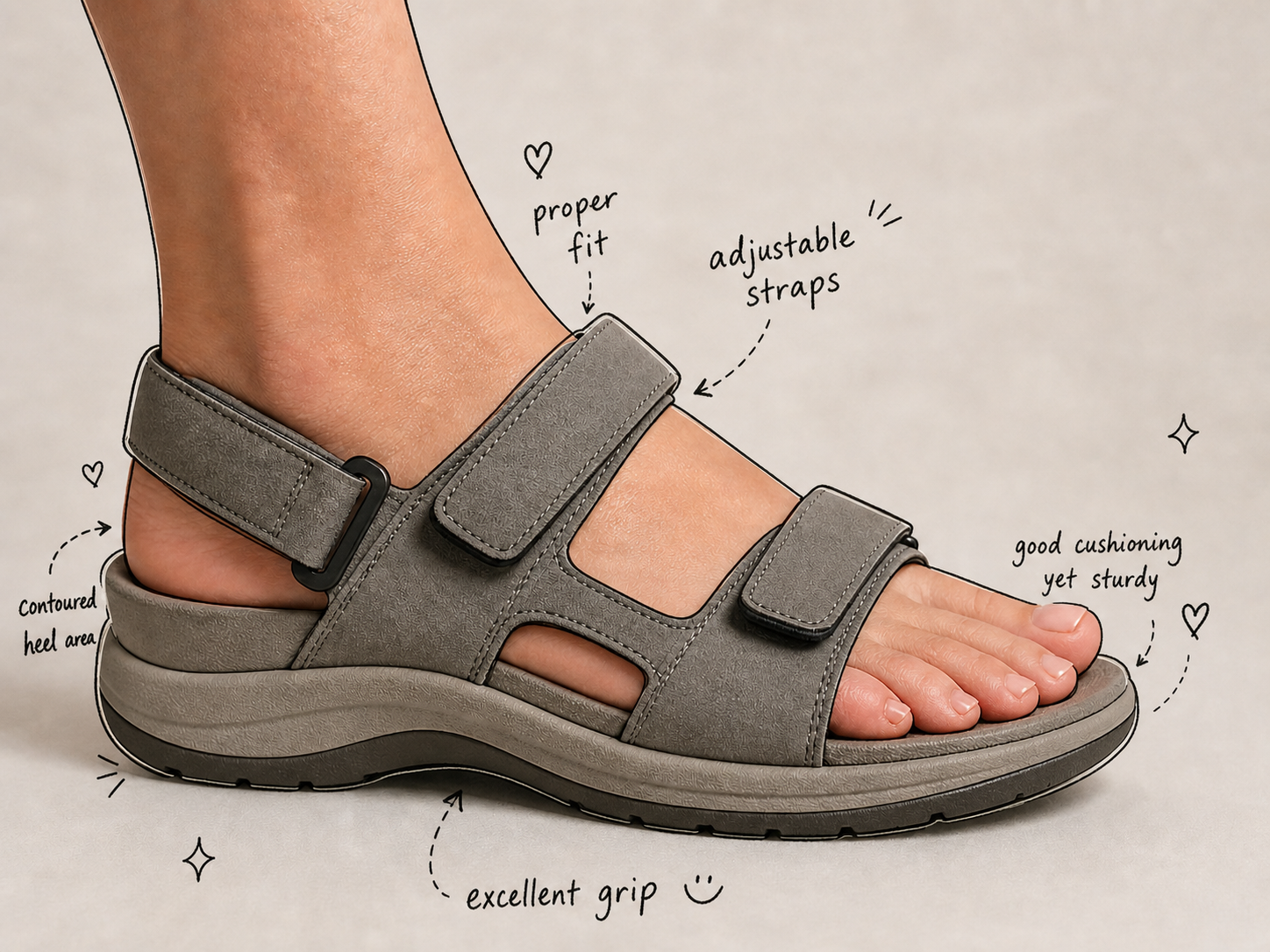
- The first feature to look for is a heel cup. A heel cup helps cradle the heel and gives the rearfoot a more stable platform. This is one reason Birkenstock-style sandals have remained popular: the footbed is shaped, rather than completely flat.
- The second feature is multiple adjustable straps. A sandal with two or three adjustable straps can be fitted more precisely across the forefoot, instep, and ankle. This matters because feet swell in hot weather, and many people have one foot slightly wider than the other.
- The third feature is a backstrap or heel-retaining structure. A sandal without a backstrap forces the toes to grip slightly to keep the shoe on. This may not matter for short indoor use, but it becomes more relevant during longer walking, travel, or shopping.
- The fourth feature is a sole that is firm enough to support walking but cushioned enough for hard surfaces. Singapore and Malaysian walking environments often involve tile, concrete, marble, and hard mall flooring. A very thin, flexible sandal may feel comfortable for five minutes but fail after a full day of walking. A supportive sandal should resist excessive twisting, should not collapse under the arch, and should have a sole with reasonable traction.
Recommended brands to consider in Singapore and Malaysia
If you require sandals with arch support:
1. Birkenstock
Best example: Milano
For a podiatry-style recommendation, Birkenstock Milano is one of the strongest options because it combines a deep heel cup, contoured cork-latex footbed, two forefoot straps, and a backstrap. The backstrap makes the Milano more stable than the Arizona for longer walking. The Arizona is iconic and comfortable for many people, but the Milano is usually the better clinical example when discussing stability.
Best for: everyday use, casual walking, people who like a firm anatomical footbed.
Caution: the cork footbed may feel hard at first and gets dirty easily. Not for persons who walk mostly on the outer-side of their feet (excessive supination).
Best for: everyday use, casual walking, people who like a firm anatomical footbed.
Caution: the cork footbed may feel hard at first and gets dirty easily. Not for persons who walk mostly on the outer-side of their feet (excessive supination).
2. Skechers Arch Fit
Best examples: GOwalk Arch Fit 2.0 Sandal, Foamies Arch Fit styles
Skechers Arch Fit sandals are widely accessible and often more affordable than premium European brands. Skechers Singapore and Malaysia list Arch Fit sandal collections, and some models include adjustable straps, contoured footbeds, machine-washable materials, and APMA Seal of Acceptance claims on selected product pages.
Best for: patients wanting lightweight cushioning, easy availability, and a softer underfoot feel.
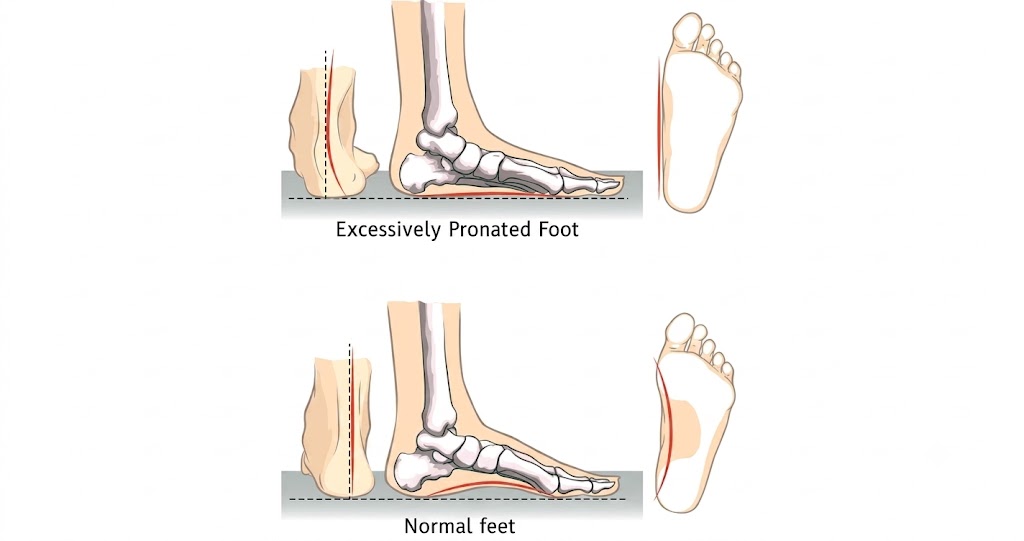
Caution: check each model individually. Some Skechers sandals have high arch support like the GOwalk Arch Fit 2.0 sandal which is suitable for person who pronate excessively but not recommended for persons who supinate excessively.
Caution: check each model individually. Some Skechers sandals have high arch support like the GOwalk Arch Fit 2.0 sandal which is suitable for person who pronate excessively but not recommended for persons who supinate excessively.
If you require sandals without arch support:
3. ECCO
Best examples: Offroad / Yucatan-style sandals
ECCO’s Offroad sandal is a strong option for people who want a walking sandal rather than a fashion sandal. The model listed on ECCO Singapore and Malaysia has a three-strap configuration, adjustable straps, a moulded EVA footbed, and a lightweight sole. This makes it suitable for people who need a more secure sandal for travel, longer walking days, or outdoor use.
Best for: travel, walking, mature patients, people who want stability but do not want a closed shoe.
Caution: it has a more outdoor aesthetic, which may not suit dressier use.
Caution: it has a more outdoor aesthetic, which may not suit dressier use.
4. Teva
Teva is useful for the Singapore and Malaysia market because many models are designed for water, travel, and warm-weather walking. The Hurricane XLT3 has three points of adjustability, a cushioned topsole, and a nylon shank designed to stabilise the foot on uneven terrain. The Terra Fi 5 is a more rugged hiking-style sandal, while the Original Universal is lighter and more casual.
Best for: travel, casual outdoor walking, wet-weather use, younger active patients.
Caution: some Teva models have less of a deep anatomical heel cup than Birkenstock. They are secure because of the straps, but the footbed shape varies by model.
Caution: some Teva models have less of a deep anatomical heel cup than Birkenstock. They are secure because of the straps, but the footbed shape varies by model.
5. KEEN
KEEN is a good option when the patient wants an open shoe rather than a traditional sandal. The Newport H2 is described by KEEN Singapore/Malaysia as having the airiness of a sandal with the toe protection of a shoe, washable webbing, and a razor-siped sole for traction. This makes it especially useful for travel, water-based activities, walking holidays, and people who want more toe protection.
Best for: travel, light hiking, wet conditions, patients who need toe protection.
Caution: visually bulkier; not everyone likes the enclosed toe-box style. Enclosed toebox style creates a heavier front.
Caution: visually bulkier; not everyone likes the enclosed toe-box style. Enclosed toebox style creates a heavier front.
6. FitFlop
FitFlop is useful for patients who want a more fashion-friendly sandal but still want more cushioning and adjustability than a flat slipper. FitFlop Singapore and Malaysia both have official online stores, and several ranges include backstraps, adjustable buckles, wide straps, and the brand’s Microwobbleboard midsole technology.
Best for: Wider feet, smart-casual use, office-casual wear, travel, patients who want comfort but not a hiking sandal.
Caution: some FitFlop models are slides or toe-post sandals without backstraps. For walking, choose the back-strap versions.
Caution: some FitFlop models are slides or toe-post sandals without backstraps. For walking, choose the back-strap versions.
7. Clarks
Best examples: selected Cloudsteppers, Torford Strap
Clarks is a practical, mainstream, fashion-friendly option because it is available in both Singapore and Malaysia. Some models include adjustable straps, moulded footbeds, Cushion Soft or Contour Cushion footbeds, and lightweight rubber outsoles.
Caution: many Clarks sandals are comfort-fashion sandals, not biomechanical sandals. Many do not have back-straps. Choose carefully.
Best overall choices by category
For an everyday sandal, Birkenstock Milano is the strongest reference model because it clearly demonstrates the principle of a deep heel cup, contoured footbed, multiple straps, and a backstrap. Provided that you dont walk mostly on the outer-side of your feet (excessive supination).
For walking and travel, ECCO Offroad/Yucatan-style sandals and Teva Terra Fi 5 or Hurricane XLT3 are better examples because they are designed for longer walking, outdoor use, and secure fixation.
For wet weather, beach holidays, and active travel, KEEN Newport H2 and selected Teva models are useful because they are designed around water-friendly materials and traction.
For a more casual comfort sandal, Skechers Arch Fit and FitFlop back-strap models are worth considering, especially for patients who find firmer cork footbeds uncomfortable.
For a dressier but still more supportive option, selected Clarks and FitFlop back-strap sandals may be more acceptable than sport sandals, provided they still have adequate rearfoot security and a stable sole.
Sandals to be careful with
The sandals most likely to cause problems are thin flip-flops, very flat slides, soft foam slippers that twist easily, and fashion sandals with narrow straps and no rearfoot control. These may be fine for very short use, such as walking around the house or poolside, but they are usually poor choices for long shopping days, travel, or repeated walking on hard urban surfaces.
A useful rule is this: if the sandal bends in half, twists like a towel, or flies off the heel when walking quickly, it is probably not the best daily walking sandal.
Practical fitting advice
- When trying sandals, check that the heel sits inside the heel cup and does not hang over the back edge.
- The arch should feel supported but not painfully pushed upward.
- The forefoot straps should hold the foot without compressing the toes.
- The backstrap should prevent the heel from lifting excessively.
- There should be enough width for the toes to spread naturally, especially in people with bunions, broad feet, or forefoot pain.
- For Singapore and Malaysia, also consider materials. Leather may look better but can be warmer and slower to dry. Webbing and synthetic materials may suit humid weather, rain, travel, and casual use better. A grippy outsole is important because smooth mall floors, wet pavements, and tiled surfaces can become slippery.
Conclusion
A good sandal should behave more like an open walking shoe: stable at the heel, secure across the midfoot, adjustable across the forefoot, and supportive under the arch. For this reason, sandals with a heel cup, multiple straps, a backstrap, and a structured sole are usually better choices than flat flip-flops or loose slides.
Remember that properly selected closed shoes will always be better than any sandal out there for your overall foot and leg biomechanics. So when given the choice, choose a shoe, but when you can't, follow the guidelines above.
Book An Appointment
Disclaimer: This article is for informational and educational purposes only and does not constitute medical advice.
About the Author
Mark B. Reyneker, BTech (Podiatry), MSc (Palaeontology) is a podiatrist and Founder & Clinical Director of Family Podiatry Centre, with more than 25 years of clinical experience across South Africa, Malaysia and Singapore. His clinical interests include foot and lower-limb pain, gait and biomechanics, sports-related foot conditions, orthotic therapy and footwear.
Alongside his clinical practice, Mark conducts research into human gait and foot biomechanics. His MSc research at the University of the Witwatersrand investigated human propulsion and the structural properties of the metatarsals. He is also the inventor of A Foot Orthotic, an orthotic technology developed through an international patent family.
Book An Appointment
Disclaimer: This article is for informational and educational purposes only and does not constitute medical advice.
About the Author
Mark B. Reyneker, BTech (Podiatry), MSc (Palaeontology) is a podiatrist and Founder & Clinical Director of Family Podiatry Centre, with more than 25 years of clinical experience across South Africa, Malaysia and Singapore. His clinical interests include foot and lower-limb pain, gait and biomechanics, sports-related foot conditions, orthotic therapy and footwear.
Alongside his clinical practice, Mark conducts research into human gait and foot biomechanics. His MSc research at the University of the Witwatersrand investigated human propulsion and the structural properties of the metatarsals. He is also the inventor of A Foot Orthotic, an orthotic technology developed through an international patent family.
Recommended posts